
Fruit Flies Live Longer When Maggots Consume Less Protein
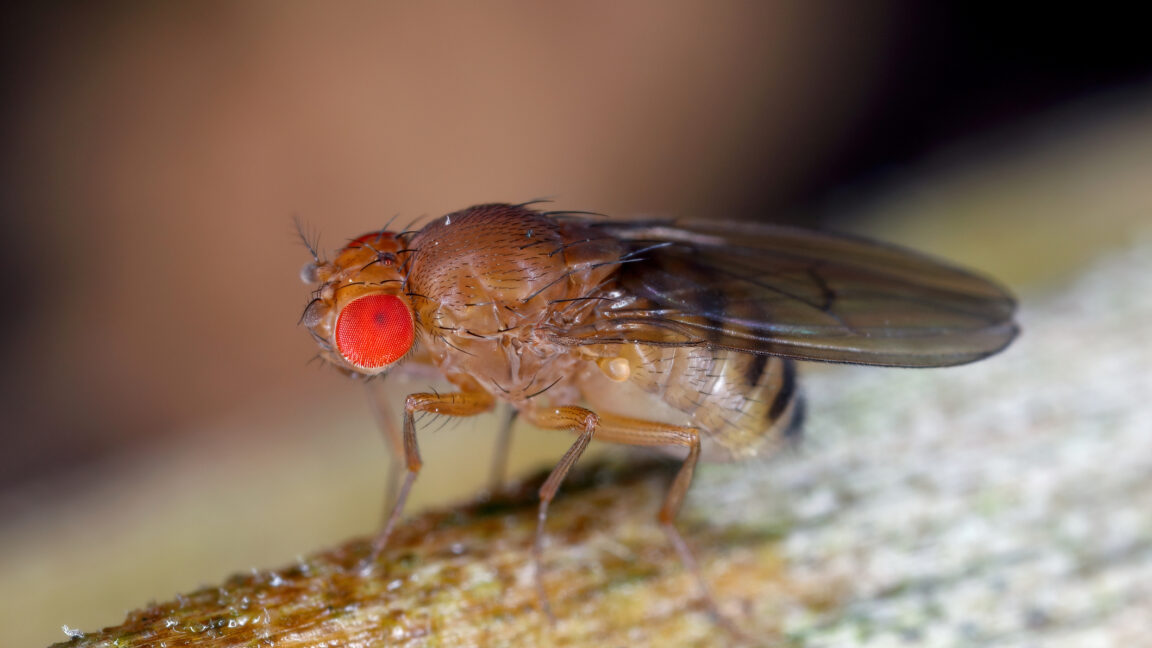
Research suggests that a low-protein diet for maggots can lead to longer lives for fruit flies. This is because the limited protein intake may affect their ability to produce proteins as adults.
A recent study found that when maggots, the larvae of fruit flies, consume less protein, the resulting adult fruit flies tend to live longer. Eating less protein as larvae may limit their ability to produce proteins as adults. This limitation can have various effects on the fruit flies' overall health and lifespan.
The research focused on the dietary habits of maggots and how they impact the development and longevity of fruit flies. By controlling the amount of protein in the maggots' diet, scientists were able to observe the effects on the subsequent adult stage. The findings suggest a link between protein intake during the larval stage and the lifespan of the adult fruit flies.
Further study is needed to fully understand the mechanisms behind this phenomenon and how it can be applied to other areas of research. However, the initial results provide insight into the importance of nutritional factors in shaping the lifespan of fruit flies.
Go Deeper
What happens when maggots eat less protein?
When maggots eat less protein, they may have limited ability to produce proteins as adults, which can affect their overall health and lifespan.
How does a low-protein diet affect fruit flies?
A low-protein diet for maggots can lead to longer lives for the resulting adult fruit flies, possibly due to the limited protein intake affecting their ability to produce proteins as adults.
What was the focus of the research?
The research focused on the dietary habits of maggots and how they impact the development and longevity of fruit flies, specifically looking at the effects of protein intake during the larval stage.
What do the findings suggest?
The findings suggest a link between protein intake during the larval stage and the lifespan of the adult fruit flies, highlighting the importance of nutritional factors in shaping their lifespan.
What is needed for further understanding?
Further study is needed to fully understand the mechanisms behind this phenomenon and how it can be applied to other areas of research, providing more insight into the relationship between nutrition and lifespan in fruit flies.
More technology
 technology
Halide Camera App Updated with iPhone 18 Pro Aperture Control
The Halide camera app has been updated to support the variable aperture on the iPhone 18 Pro's main camera. The update also adds two new photography l
Sep 30 technology
Microsoft Denies Plans to Sell Xbox Business
Microsoft's gaming chief, Asha Sharma, has denied reports that the company is considering selling its Xbox business. The denial comes after reports su
Sep 30 technology
Protest Sculpture Depicts AI Leaders on Sinking Ship
A new sculpture has been created to protest against OpenAI, depicting its leaders escaping a sinking ship. The sculpture is the latest in a series of
Sep 30