
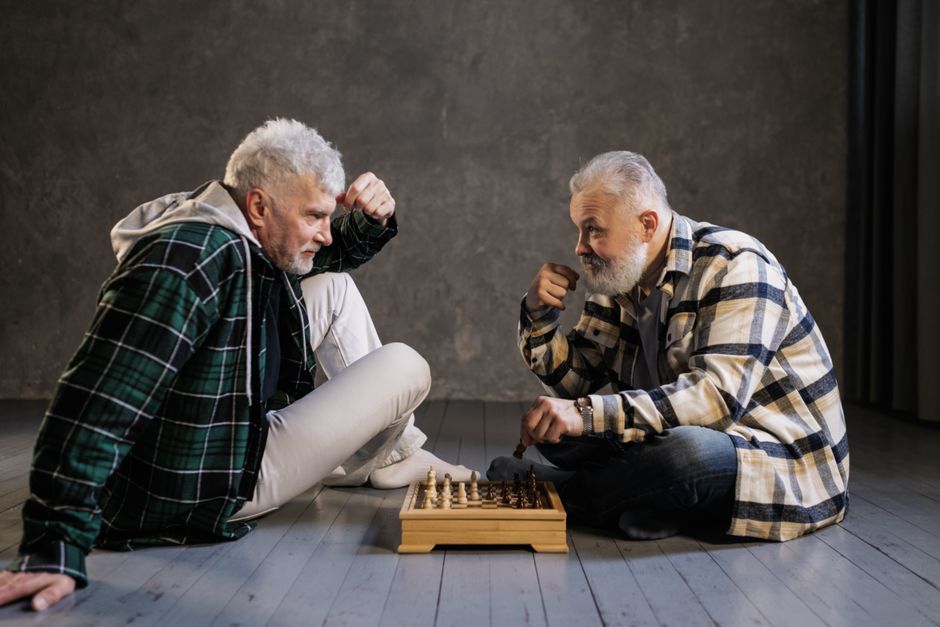
If you tried to play chess in 2010, you needed a board, an opponent, a chess club, and the patience to find someone roughly at your skill level. Twenty years later, chess is in the middle of a global renaissance. The Netflix series 'The Queen's Gambit' brought millions of new players to the game in 2020. The rise of high-quality online platforms made it possible to play any time of day against anyone in the world. And the development of AI analysis tools has made improvement accessible in ways that previous generations of players could only dream of. Chess.com alone now has over 200 million active accounts, and Lichess.org (the leading free alternative) has tens of millions more.
What is interesting for older adults is that this boom has been particularly welcoming to adult learners. The communities on these platforms are large enough that you can almost always find an opponent at your exact skill level — no more being crushed by experts or struggling against rank beginners. The AI analysis lets you understand your mistakes immediately after every game. And the structured learning resources have improved so dramatically that an adult coming back to chess can make more progress in three months in 2026 than they could have made in three years in 1995.
All of this is also great for the brain. Chess is one of the most well-studied hobbies for cognitive benefits in older adults. Multiple studies have found that regular chess play is associated with improved memory, attention, problem-solving, and visuospatial skills, and it has been linked in some research to slower cognitive decline. The combination of pattern recognition, planning, decision-making, and emotional regulation that chess requires uses many of the same brain systems that age can wear on, and exercising those systems is good for them in the same way walking is good for your legs.
There are two free platforms that dominate online chess, and both are excellent. Pick one and start there.
Chess.com is the largest, the most polished, and the one most people gravitate to. It has a generous free tier — you can play unlimited games against humans or computers, do unlimited tactics puzzles, and access basic lessons for free. The paid membership ($5 to $15 per month depending on level) unlocks more lessons and analysis features, but the free version is more than enough for the first six months to a year. Chess.com also has the largest user base, which means you will always find someone to play.
Lichess.org is the open-source alternative — entirely free, no ads, no premium tier, no upsell. It has a slightly more spartan interface but every feature is included for everyone. Many serious chess players prefer Lichess for its ethic of free access. Both platforms work on phones, tablets, and computers, so you can play anywhere.
直接プレイしたい場合は、地元のチェスクラブを探してください。米国チェス連盟は、uschess.org でディレクトリを管理しています。多くの図書館やコミュニティ センターでも、平日の夜にカジュアルなチェスの集まりが開催されることがよくあります。オンラインと対面プレイの組み合わせは理想的です。オンラインでは利便性と常に対戦相手を獲得できるため、対面プレイではソーシャルな側面を重視します。 |||9月||| 改善計画を始める前に、現状を把握してください。チェスに戻る大人のほとんどは、3 つの出発点のいずれかを持っています。 |||9月||| あなたがまったくの初心者である場合 (駒の動かし方がわからない、または漠然としか覚えていない) は、Chess.com または Lichess.org の初心者向けチュートリアルから始めてください。どちらのプラットフォームにも、数時間で「これはナイトだ」から「ゲームを完全にプレイできる」まで段階的に進むステップバイステップのレッスンが用意されています。まずこれを実行してください。 |||9月||| 編集者のおすすめ · この記事に関連する |||9月||| マスタークラス |||9月||| 世界クラスのインストラクターから写真、料理、ガーデニングなどを学びましょう。 |||9月||| 詳細を見る → |||9月||| Amazonで関連商品を購入する |||9月||| 対象となる購入から手数料を得る場合があります。 50 歳以上の大人向けに選ばれています。 |||9月||| 基本的なルールは覚えているが、20 年間プレイしたことがない場合は、さびを取るために、最低の難易度設定でコンピュータと 5 ~ 10 ゲームをプレイすることから始めてください。次に、初心者レベルで人間といくつかのゲームをプレイします。プラットフォームは数試合後に評価を与え、あなたのレベルの対戦相手とのマッチングを開始します。 |||9月||| 以前真剣なプレイヤーだった場合、またはルールをよく覚えている場合は、すぐに定格ゲームをプレイして始めてください。プラットフォームはあなたのレベルをすぐに見つけます。次に、以下の改善計画に進みます。 |||9月||| 出発点が何であれ、プライドが邪魔をしないようにしてください。大人の帰国者の多くは、「昔は知っていた」という理由で、基本を飛ばしたいと考えています。減速する。基本を覚えている場合でも、数時間かけて基礎を学びましょう。長期的な改善のほとんどはファンダメンタルズから生まれます。 |||9月||| これは、大人のチェス復帰者にとって真の進歩をもたらす体系化された計画です。これはアマチュアの向上のためにほとんどのコーチが推奨している内容に基づいており、実行可能な 2 か月のルーチンに凝縮されています。 |||9月||| 第 1 ~ 2 週目: 戦術。戦術とは、材料を獲得したりチェックメイトしたりするための短い動きの組み合わせであり、大人の上達にとって最も重要なことです。 Chess.com または Lichess で戦術パズルに 1 日 15 ~ 20 分を費やしてください。どちらも、あらゆるレベルのパズルの巨大なデータベースを備えており、あなたの能力に合ったパズルを自動的に提供します。アマチュアレベルにおける上達の最大の予測因子は戦術の鋭さであり、パズルはそれを直接構築します。 |||9月||| 第 3 ~ 4 週: 冒頭の原則。冒頭のセリフを覚えてはいけません。大人は、本やビデオから特定の冒頭のシーケンスを暗記しようとする間違いをよく犯します。これは無駄な努力です。代わりに、4 つの基本的な開始原則を学びましょう。センターをコントロールし、マイナーな駒 (ナイトとビショップ) を開発し、キングを安全な場所に守り、ルークを接続します。すべてのゲームでこれらの原則に従えば、何も覚えなくてもまともな序盤をプレイできるでしょう。 |||9月||| 第 5 ~ 6 週目: エンドゲーム。ほとんどのアマチュアの試合は終盤までに終わりますが、そこに到達する少数の試合は、習得するのにわずか数時間しかかからない知識によって決まります。キングとポーンのエンドゲーム、基本的なチェックメイト (キングとクイーン対キング、キングとルーク対キング)、およびアクティブ キングの原則を学びます。 Lichess エンドゲーム トレーナーは優れており、無料です。 |||9月||| 第 7 ~ 8 週: ゲーム分析。速い「弾丸」ゲームや「電撃」ゲームではなく、ゆっくりとしたゲームをプレイし、その後コンピューター分析ですべてのゲームをレビューします。自分が犯した間違いを探し、なぜ間違いだったのかを理解し、次回同じ間違いをしないように努めてください。ゲームレビューは最も活用されていない改善ツールであり、他のどの習慣よりも早く上達します。 |||9月||| オンライン チェスをプレイするときは、各プレイヤーがゲーム全体にどれだけの時間を費やせるかという時間コントロールを選択します。 「ブレット」(片面 1 分)、「ブリッツ」(3 ~ 5 分)、「ラピッド」(10 ~ 30 分)、「クラシック」(60 分以上)まで選択肢があります。大人の上達には、速弾きかクラシックを弾くか、答えは明らかです。バレットとブリッツは楽しいですが、考えるよりも本能とパターン認識が重視されるため、やりすぎると下手なプレイヤーになってしまいます。
Before you start an improvement plan, figure out where you actually are. Most adults coming back to chess have one of three starting points.
If you are an absolute beginner — you do not know how the pieces move, or you only vaguely remember — start with the Chess.com or Lichess.org beginner tutorial. Both platforms have step-by-step lessons that take you from 'this is a knight' to 'I can play a complete game' in a couple of hours. Do this first.
If you remember the basic rules but have not played in twenty years, start by playing five or ten games against the computer at the lowest difficulty setting, just to get the rust off. Then play a few games against humans at the beginner level. The platforms will give you a rating after a few games and start matching you against opponents at your level.
If you used to be a serious player or you remember the rules well, start by playing rated games right away. The platform will quickly find your level. Then move into the improvement plan below.
Whatever your starting point, do not let pride get in the way. Many adult returners want to skip the basics because they 'used to know this.' Slow down. Spend a few hours on the fundamentals even if you remember them. The fundamentals are where most of the long-term improvement comes from.
Here is a structured plan that produces real progress for adult chess returners. It is based on what most coaches recommend for amateur improvement, condensed into a doable two-month routine.
Weeks 1-2: Tactics. Tactics are short combinations of moves that win material or checkmate, and they are by far the most important thing for adult improvement. Spend 15-20 minutes a day doing tactics puzzles on Chess.com or Lichess. Both have huge databases of puzzles at every level, and they automatically give you ones that match your ability. The single biggest predictor of improvement at any amateur level is tactical sharpness, and puzzles build it directly.
Weeks 3-4: Opening Principles. Do not memorize opening lines. Adults frequently make the mistake of trying to memorize specific opening sequences from books or videos. This is wasted effort. Instead, learn the four basic opening principles: control the center, develop your minor pieces (knights and bishops), castle your king to safety, and connect your rooks. If you follow these principles in every game, you will play decent openings without memorizing anything.
Weeks 5-6: Endgames. Most amateur games end before the endgame, but the few that reach it are decided by knowledge that takes only a few hours to learn. Study the king and pawn endgame, basic checkmates (king and queen vs king, king and rook vs king), and the principle of the active king. The Lichess endgame trainer is excellent and free.
Weeks 7-8: Game Analysis. Play slow games — not the fast 'bullet' or 'blitz' games — and review every single one with the computer analysis afterward. Look for the mistakes you made, understand why they were mistakes, and try not to make the same mistakes next time. Game review is the single most underused improvement tool, and it produces faster progress than any other single habit.
When you play online chess, you choose a time control — how much time each player has for the entire game. The choices range from 'bullet' (1 minute per side) to 'blitz' (3-5 minutes) to 'rapid' (10-30 minutes) to 'classical' (60+ minutes). For adult improvement, the answer is clear: play rapid or classical. Bullet and blitz are fun but they reward instinct and pattern recognition over thinking, and they make you a worse player if you play too much of them.
ほとんどの大人の学習者にとって最適な時間は 15 分または 30 分のゲームです (時間管理表記では 15+10 または 30+0、2 番目の数字は手ごとに追加される増分です)。これらにより、実際に自分の動きを考え、事前に計算し、各ゲームから学ぶのに十分な時間が得られます。また、各ゲームに長時間かかることなく、セッションごとに十分なゲームを提供してエクスペリエンスを構築できます。 |||9月||| 速いゲームをプレイしたいという誘惑に抵抗してください。速いゲームはエンターテイメントであって改善ではありません。そして、それがあなたの行動のほとんどである場合、悪い習慣を強化します。 |||9月||| 現代のチェス学習者が利用できる最も強力なツールの 1 つはコンピューター分析です。 Chess.com または Lichess での各対局後にボタンをクリックすると、コンピューターがどの手が良かったのか、どの手が悪かったのか、そしてより良い代替案は何だったのかを正確に教えてくれます。これは、過去のグランドマスターが死ぬほど欲しがっていたツールであり、今日では誰でも無料で利用できます。 |||9月||| 問題は、コンピューター分析は残酷になる可能性があるということです。このエンジンは人間には太刀打ちできないレベルで動作し、素晴らしいと思った動きをミスとしてマークします。だからといって落胆しないでください。分析のポイントは、自分のプレーについて悪い感情を抱くことではありません。それは、あなたが見逃し続けているパターンを見つけて、それを見逃すのを防ぐことです。 |||9月||| 分析の正しい使い方: 最大の間違い (勝ちから負け、またはその逆にコンピュータが判断した動き) に焦点を当てます。なぜその動きが悪かったのか、そしてより良い動きは何かを理解するように努めてください。小さな誤差は気にする必要はありません。 1 試合につき 1 ~ 2 つの大きなレッスンで十分であり、数週間にわたってそれらのレッスンが積み重なり、真の向上につながります。 |||9月||| チェスは、深くなればなるほど豊かになる数少ない趣味の 1 つです。ゲームは本質的に無限です。観測可能な宇宙には原子よりも多くの可能なチェスの局面があり、誰もそれを使い果たすことはありません。史上最強のプレイヤーでも、今でも新しいアイデアを発見しています。その奥深さは、60歳でチェスを始めても、90歳になっても新しいことを学び続けることができ、興味深いネタがなくなる危険がないことを意味します。 |||9月||| チェスはまた、家から出る必要なくコミュニティを提供します。オンライン チェスの世界は巨大で、大人の学習者にとってもフレンドリーで、1 日 24 時間活動しています。眠れない場合は、早朝 3 時にアルゼンチンの誰かと対戦することもできます。社交的な側面が必要な場合は、チェス クラブに参加して地元のプレイヤーと出会うこともできます。 YouTube や Twitch でグランドマスターがゲームをストリーミングするのを見て、浸透によって学ぶことができます。趣味は自分がなりたいものは何でもいいのです。 |||9月||| そして最後に、チェスは高齢者が利用できる最も強力な頭の体操の 1 つです。パターン認識、計算、計画、記憶、感情の調整、不確実性の下での意思決定の組み合わせは、脳が持つほぼすべての認知システムを使用しており、これらのシステムを鍛えることは、多くの研究で測定されている方法で本当に健康に良いことです。 60代になってから1日30分間チェスをするより悪いことがある。これほど楽しいこととこれほど多くのメリットを兼ね備えたものはほとんどありません。
Resist the temptation to play fast games. Fast games are entertainment, not improvement, and they reinforce bad habits if they are most of what you do.
One of the most powerful tools available to modern chess learners is computer analysis. After every game on Chess.com or Lichess, you can click a button and the computer will tell you exactly which moves were good, which were bad, and what the better alternatives would have been. This is a tool that grandmasters of the past would have killed for, and it is free for anyone today.
The catch is that computer analysis can be brutal. The engine plays at a level no human can match, and it will mark moves you thought were brilliant as mistakes. Do not let this discourage you. The point of analysis is not to feel bad about your play; it is to find the patterns you keep missing so you can stop missing them.
The right way to use analysis: focus on your biggest mistakes (the moves where the computer says you went from winning to losing or vice versa). Try to understand why the move was bad and what the better move was. Do not worry about every small inaccuracy. One or two big lessons per game is plenty, and over the course of a few weeks, those lessons add up to real improvement.
Chess is one of the few hobbies that gets richer the deeper you go. The game is essentially infinite — there are more possible chess positions than atoms in the observable universe, and no one will ever exhaust it. Even the strongest players in history are still discovering new ideas. The depth means that you can take chess up at sixty and still be learning new things at ninety, with no danger of running out of interesting material.
Chess also gives you a community without requiring you to leave your house. The online chess world is huge, friendly to adult learners, and active twenty-four hours a day. You can play someone in Argentina at three in the morning if you cannot sleep. You can join a chess club and meet local players if you want the social side. You can watch grandmasters stream their games on YouTube and Twitch and learn by osmosis. The hobby is whatever shape you want it to be.
And finally, chess is one of the most powerful brain workouts available to older adults. The combination of pattern recognition, calculation, planning, memory, emotional regulation, and decision-making under uncertainty uses nearly every cognitive system the brain has, and exercising those systems is genuinely good for you in ways that have been measured in many studies. There are worse things to do for thirty minutes a day in your sixties than play chess. There are very few things that combine so much fun with so much benefit.