
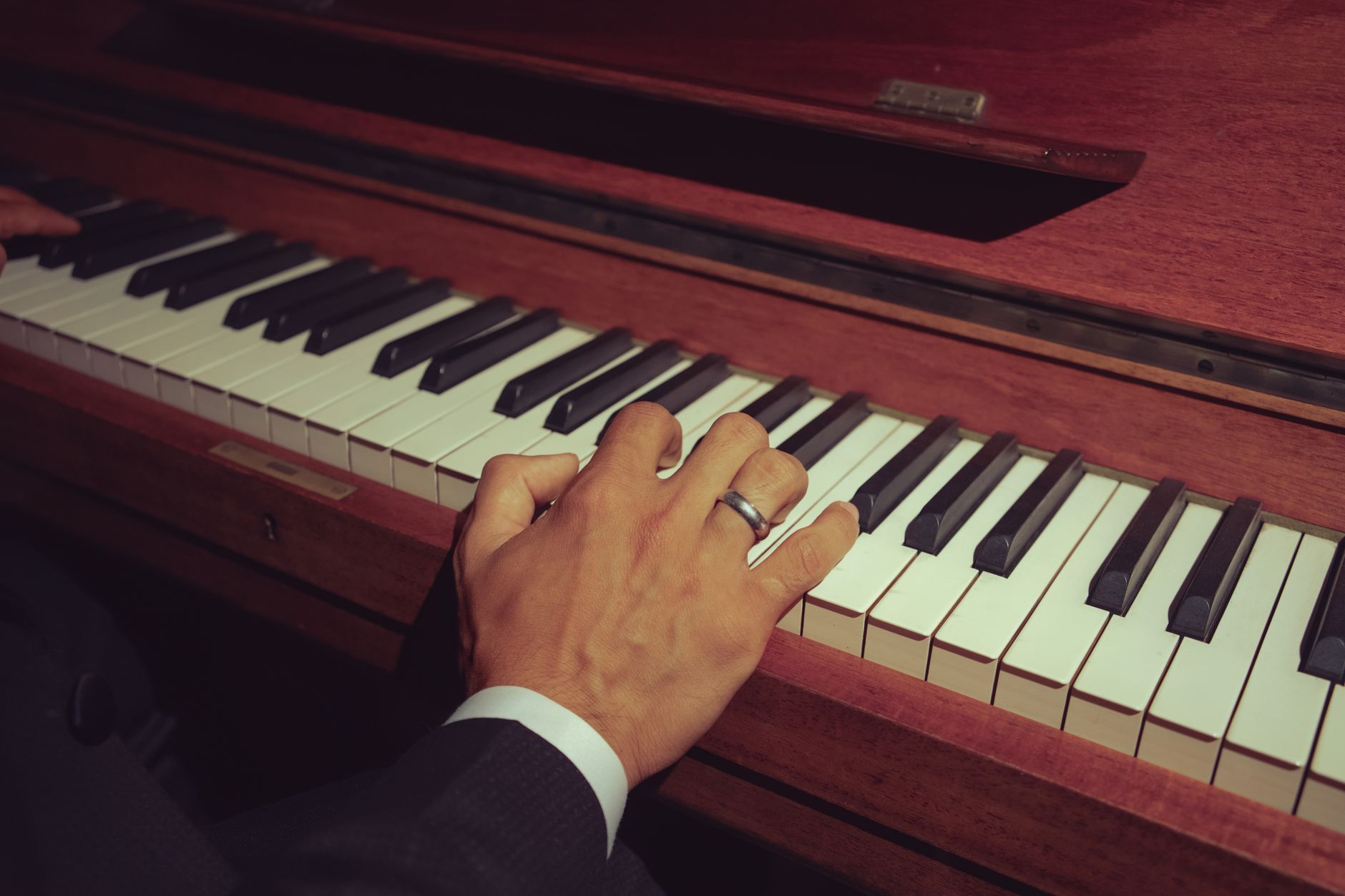
Learning Piano
Learning piano is one of the best things you can do for your brain, and even a few notes bring real joy. A modern keyboard makes starting easy and affordable.
What you need to start
- A keyboard or piano
- A book of beginner songs
- A little daily practice
- Patience with your own pace
At a glance
Your learning path
Three stages, taken at your own pace. Start at the top, get comfortable, then move down as you grow. There is no rush, and no wrong place to begin.
Start right here. These four lessons walk you through the keyboard itself, a comfortable hand position, your very first tune, and how to make sense of those notes on the page. Watch, pause, and play along at your own pace.
How To Play Piano (Beginner Piano Lesson)
PianoteThe Only Piano Hand Position Video You'll Ever Need (5-Minute Fix)
South Shore Piano School4 Easy Songs For Beginners (Piano Tutorial)
PianoteHow To Read Notes (Beginner Piano Lesson)
PianoteNow we bring it together. You'll coordinate both hands, learn the scales and chords that unlock hundreds of songs, play a tune everyone will recognize, and lock in your timing. This is where it really starts to feel like music.
Playing piano with both hands: 3 SIMPLE hand coordination exercises [Hand Independence]
Creative Piano AcademyPlay Piano With Lisa - Scales (FULL Play-Along Lesson)
PianotePiano chords basics - make your progressions flow
Bill HiltonHow To Play "Let It Be" By The Beatles (Beginner Piano Lesson)
PianoteHow To Use a Metronome (Piano Practice Tips)
PianoteReady to add real color and expression? These lessons cover richer chord voicings, flowing arpeggios, the sustain pedal, a beautiful classical piece, and the freedom of playing by ear. Take them slowly and enjoy how far you've come.
Four Awesome Major Chord Voicings for Piano
MangoldProjectHow to Play Arpeggios on Piano: The Basics
Piano Lessons On The WebHow To Use A Sustain Pedal - Piano Lesson (Pianote)
PianoteBeethoven - Moonlight Sonata Piano Tutorial | ORIGINAL First Movement
Hoffman AcademyPlay Any Song By Ear in 3 Simple Steps (Piano Lesson)
PianoteWhy learning piano is wonderful after 50
It is never too late to learn the piano. There is no age limit on making music, and starting now is something to be proud of. Learning new pieces gives your brain a wonderful workout, building memory, focus, and the coordination between your hands and eyes. Many people find that regular practice sharpens the mind and lifts the mood. Best of all is the pure joy of it: sitting down and filling a room with a song you love, sharing music with family and friends, and discovering a creative outlet that grows richer every year. The piano rewards patience, and you have plenty of wisdom to bring to it.
Your first month, week by week
Get comfortable at the instrument. Find a good seated height, learn where Middle C lives, and practice naming the white keys using the two- and three-black-key groups as landmarks. Spend a few minutes each day just playing single notes and saying their names out loud.
Focus on your hands. Curve your fingers gently, keep your wrists level, and try simple five-finger patterns with each hand separately. Add a very short, easy melody like "Mary Had a Little Lamb." Slow and relaxed beats fast and tense every time.
Begin reading. Learn the treble and bass staff lines and spaces, and connect a few written notes to keys under your fingers. Play your beginner song while glancing at the music instead of your hands. Short daily sessions build recognition fastest.
Bring your hands together. Try a simple piece with the right hand on melody and the left holding single notes or a basic chord. Celebrate the milestone, then pick one new short song to carry into next month. You are officially playing piano.
Common mistakes to avoid
- Ignoring posture and hand position: sit with level wrists and gently curved fingers so you play on the fingertips. Slumping or flat fingers cause strain and slow you down.
- Looking only at your hands: glance at the keys when you must, but train your eyes to follow the music so reading becomes second nature.
- Skipping slow practice: rushing builds in mistakes. Play a passage slowly and correctly first, then speed up gradually only once it feels easy.
- Practicing without a metronome: it is easy to drift in tempo. A metronome (even a free phone app) keeps your timing honest and steady.
- Only ever playing hands separately: separate-hand work is great, but make a point of putting both hands together, slowly, to build true coordination.
- Trying to learn a whole song at once: break pieces into small sections, master each one, then stitch them together. Small wins add up quickly.
Make it easier on your body
Simple ways to keep learning piano comfortable and safe with arthritis, low vision, or limited mobility.
- If your hands are stiff or arthritic, a digital piano with lighter or semi-weighted keys is far gentler than a heavy acoustic action, so you can play longer in comfort.
- Use an adjustable bench or chair so you can set the perfect height for level wrists and a relaxed back, which protects your shoulders and neck.
- For low vision, large-print sheet music and learning apps that light up the correct keys make it much easier to follow along without straining.
- Do a few gentle hand and finger warm-ups before you play, and shake out your wrists, to loosen the joints and reduce stiffness.
- Practice with headphones plugged into a digital piano so you can play any time of day or night without disturbing anyone in the house.
- Keep sessions short and frequent: three relaxed ten-minute sessions are kinder on your hands, and often more effective, than one long one.
Words you'll hear
- Octave
- The distance from one note to the next note of the same name, higher or lower. From one C to the next C is one octave, spanning eight white keys.
- Chord
- Three or more notes played together at the same time to create a fuller, harmonious sound. A C major chord is the notes C, E, and G.
- Scale
- A ladder of notes played in order, up or down. The C major scale uses only the white keys from one C to the next and is the usual starting point.
- Sharp / Flat
- A sharp (#) raises a note slightly, usually to the black key just to its right; a flat lowers it, usually to the black key just to its left.
- Tempo
- The speed of the music, measured in beats per minute. A metronome helps you hold a steady tempo while you practice.
- Arpeggio
- The notes of a chord played one after another instead of all together, creating a flowing, rippling effect across the keys.
Where to find your people
- Local piano teachers offer one-on-one lessons in person or online, and many happily welcome adult beginners and tailor each lesson to your pace.
- Community education and adult-learning classes, often run through local colleges or recreation centers, offer affordable group piano courses.
- Senior centers frequently have a piano on site and host music groups, sing-alongs, and informal lessons that are a friendly way to start.
- Online lesson platforms and communities, such as Pianote and active piano forums and groups, connect you with teachers and fellow learners worldwide.
- Adult recital groups and local music clubs give you a warm, low-pressure place to perform a piece for others and cheer one another on.
Start learning Learning Piano
Sign up for our free, friendly lessons and we will help you take the first step. Tell us where you are starting from and we will meet you there.
More in Music & Movement

Ukulele
The happiest instrument, and the easiest to learn
Start this one →
Yoga for Seniors
Gentle movement for strength, balance, and calm
Start this one →
Tai Chi
Gentle, flowing movement that steadies body and mind
Start this one →
Ballroom & Social Dancing
Glide across the floor with a partner
Start this one →