
Scientists Discover Long-Lived Butterfly Species
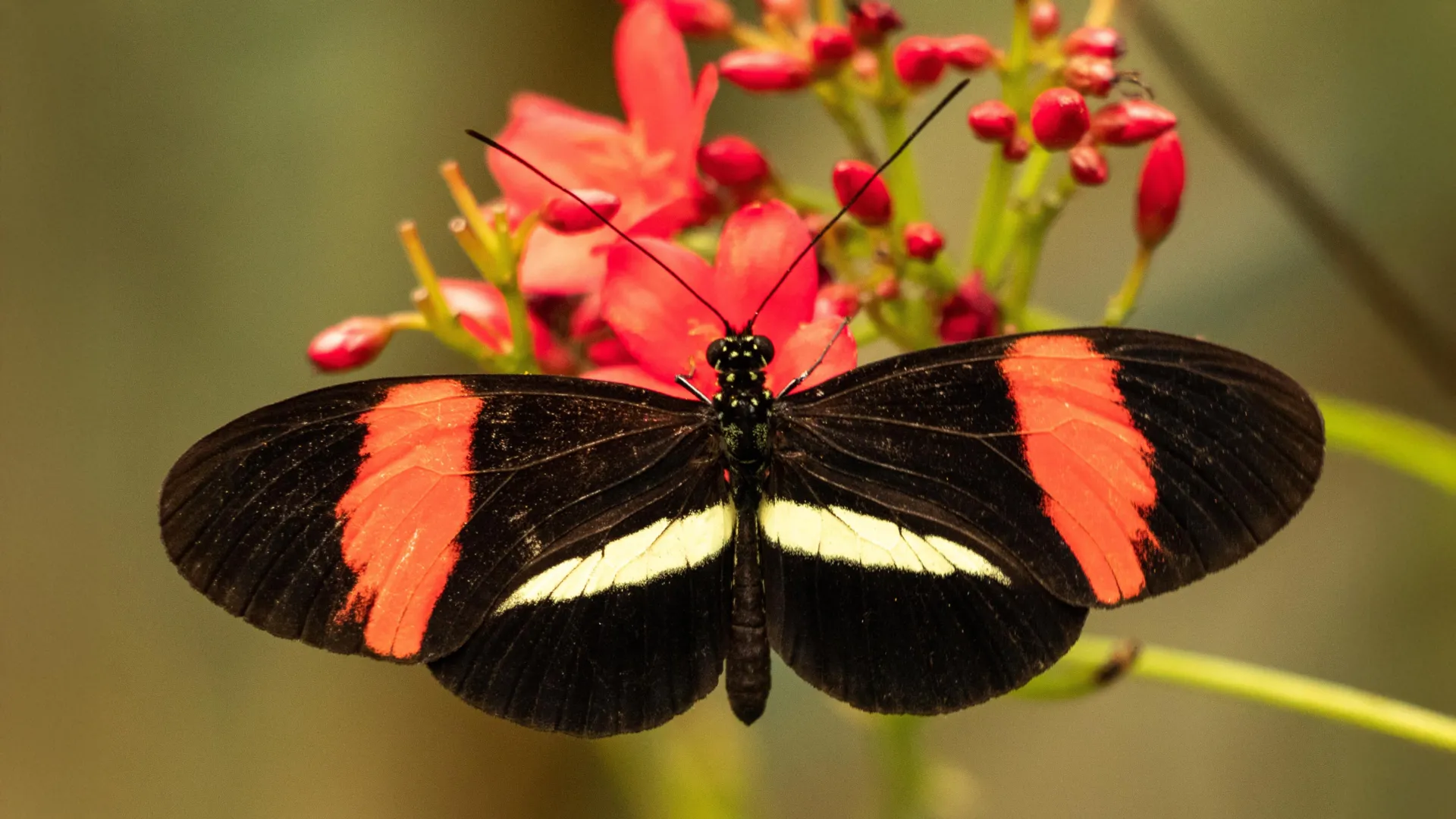
Researchers found that Heliconius butterflies live several times longer than closely related species. These butterflies show little sign of physical decline as they age, which could help unlock longevity secrets.
Scientists have made a significant discovery about the lifespan of Heliconius butterflies. These butterflies live several times longer than closely related species. What's even more surprising is that some of them show little sign of physical decline as they age. The unusual pollen-feeding lifestyle of Heliconius butterflies may play a role in their longevity, but the research suggests that deeper evolutionary changes are also helping them stay healthy for longer. The discovery of this long-lived butterfly species could potentially help unlock the secrets of longevity. By studying the Heliconius butterflies, researchers may be able to identify factors that contribute to their extended lifespan and apply this knowledge to human health.
The research on Heliconius butterflies is ongoing, and scientists are working to understand the underlying mechanisms that allow these butterflies to live longer and healthier lives. This could lead to new insights into the aging process and potentially new ways to promote healthy aging in humans.
Go Deeper
What is unique about the lifespan of Heliconius butterflies?
Heliconius butterflies live several times longer than closely related species, with some showing little sign of physical decline as they age.
What might be contributing to the longevity of Heliconius butterflies?
Their unusual pollen-feeding lifestyle may play a role, but deeper evolutionary changes are also thought to be helping them stay healthy for longer.
Why is this discovery important?
The discovery of this long-lived butterfly species could help unlock the secrets of longevity and potentially lead to new insights into the aging process and healthy aging in humans.
What are researchers doing to learn more about Heliconius butterflies?
Scientists are working to understand the underlying mechanisms that allow these butterflies to live longer and healthier lives, which could lead to new ways to promote healthy aging in humans.
What could be the potential benefits of this research?
The potential benefits of this research include new insights into the aging process, and potentially new ways to promote healthy aging in humans, which could improve human health and wellbeing.
More health
 health50+
Mental Stimulation May Reduce Alzheimer's Risk
A lifetime of mental stimulation may help protect the brain as we age. People with high levels of cognitive enrichment had a lower risk of Alzheimer's
Jul 17 health50+
Researchers Identify Protein That May Contribute to Parkinson's Spread
Researchers have identified a protein called GPNMB that may play a role in the spread of Parkinson's disease through the brain. In experiments, blocki
Jul 16 health50+
Study Links High Meat Consumption to Lower Alzheimer’s Risk for Some Genetic Groups
新しい研究は、高リスクのAPOE遺伝子変異を持つ高齢者は、肉を大量に食べると認知機能の低下が遅くなる可能性があることを示唆しています。の |||9月||| 50 Plus Hub は、50 歳以降のスマートな生活のための日刊新聞スタイルのポータルです。役立つガイダンス、ゲーム、ツール、セール、わかりやすい英語のヘルプが含まれています。 |||9月||| トピックス |||9月||| 10年までに |||9月||| 50代 |||9月||| 60代 |||9月||| 70代の場合 |||9月||| 80年以降 |||9月||| ゲームとツール |||9月||| メモリーマッチ |||9月||| リコールチェーン |||9月||| テレビの夜 |||9月||| 聖書トリビア |||9月||| 健康とウェルネス |||9月||| 医療警告 |||9月||| 生命保険 |||9月||| 携帯電話プラン
Jul 16