
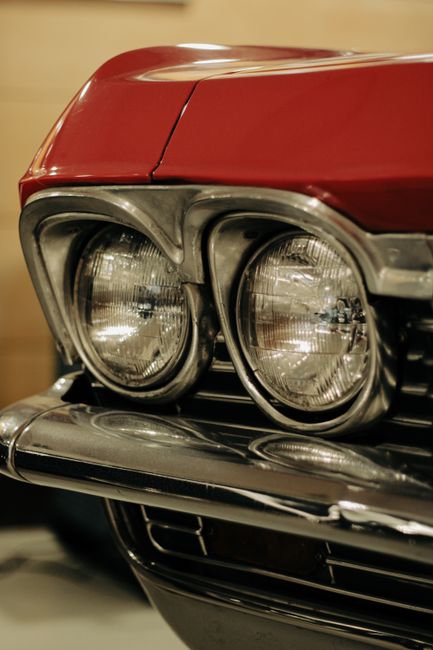
The 1969 Camaro Z28 occupies a singular place in American automotive history. Born from a racing loophole, powered by an engine that General Motors officially pretended made less power than it actually did, and styled with the most aggressive sheet metal of the first-generation Camaro run, the '69 Z28 is the car that proved Chevrolet could beat Ford at its own game — on the track and in the showroom. More than half a century later, clean examples routinely cross the six-figure mark at auction, and the car's reputation as a blue-chip collectible has only strengthened with time. Here is everything you need to know about what makes this car special, what it is worth today, and how to avoid buying a fake.
The Z28 exists because of a rule book. In the mid-1960s, the Sports Car Club of America's Trans-American Sedan Championship (Trans-Am) was the most prestigious road-racing series for production-based sedans in North America. The series had one critical regulation: engine displacement could not exceed 305 cubic inches (5.0 liters). Ford was already dominating Trans-Am with the Mustang, and Chevrolet's performance chief Vince Piggins saw an opportunity.
Piggins proposed a special Camaro package built around a destroked 327ci small-block bored to 4.001 inches with a 3.0-inch stroke crankshaft from the 283, yielding exactly 302.4 cubic inches — safely under the 305ci limit. The SCCA required that at least 1,000 street versions be sold for homologation, so the Regular Production Option (RPO) Z28 was created for the 1967 model year.
Chevrolet never actually called it the "Z28" in advertising that first year. It was simply a $358.10 option package on the order sheet — no badges, no callouts in the brochure. You had to know to ask for it. Only 602 were built in 1967, just barely meeting the SCCA's production minimum. By 1968, word had spread through the enthusiast press, and production jumped to 7,199. But it was 1969 that transformed the Z28 from a homologation special into an icon.
The 1969 Camaro received the most significant styling update of the first generation. The body lines were sharper and more sculpted than the 1967-68 cars, with a lower, wider stance that looked faster standing still. The front end gained a more aggressive grille opening, and the rear featured revised taillights. For the Z28 specifically, the package now included bold "Z28" graphics on the front fenders and rear spoiler — the first time the designation appeared prominently on the car's exterior.
Beyond aesthetics, the '69 Z28 benefited from chassis refinements developed through two years of Trans-Am competition. The suspension was better sorted, the four-speed Muncie M21 (close-ratio) or M22 ("Rock Crusher") transmissions were tougher, and the overall package felt more complete than the earlier cars. No automatic transmission was available — the Z28 was a driver's car, period.
수집가들은 여러 가지 이유로 다른 모든 1세대 Z28보다 1969년형을 높이 평가합니다. 스타일링은 보편적으로 1967~69년의 가장 아름다운 스타일로 간주됩니다. 부품 가용성과 문서화가 합리적일 만큼 생산량이 높았지만(19,014개), 실제 희소성을 유지할 만큼 낮았습니다. 그리고 이 차는 1세대 개발의 정점을 상징했습니다. 쉐보레가 2년간의 경주를 통해 배운 모든 것이 69년에 구현되었습니다. |||9월||| Z28의 핵심은 GM 역사상 가장 과소평가된 엔진 중 하나인 DZ 302 소형 블록 V8이었습니다. 쉐보레는 이를 290마력으로 평가했는데, 업계의 모든 사람들이 의도적으로 보수적인 수치로 이해한 수치입니다. 독립적인 다이노 테스트에서는 지속적으로 350마력 이상의 출력이 나타났으며 잘 조정된 일부 예는 370마력을 초과했습니다. 낮은 공식 수치는 부분적으로는 구매자에게 합리적인 보험료를 유지하기 위한 것이고 부분적으로는 GM이 대형 자동차보다 작은 차량에 입방인치당 1마력 이상의 엔진을 제공하는 것에 대한 내부 정책을 갖고 있었기 때문입니다. |||9월||| 302.4입방인치(4.96L). 4.001" 보어 x 3.0" 스트로크. 단조 강철 283 크랭크샤프트가 있는 327 블록을 기반으로 합니다. 생산 엔진의 2볼트 메인 캡. |||9월||| 2.02" 흡입 및 1.60" 배기 밸브가 있는 고성능 "낙타 혹" 주조 #3927186 실린더 헤드. 0.485" 리프트 흡입구/0.485" 리프트 배기 장치를 갖춘 솔리드 리프터 캠샤프트 - 이 엔진은 당시 생산 푸시로드 V8에서는 전례가 없었던 7,000+ RPM까지 안정적으로 회전했습니다. |||9월||| 이중 평면 알루미늄 흡기 매니폴드의 Holley 780 CFM 4배럴 기화기(#4053). 11.0:1 압축비 - 이 엔진에는 고급 연료가 필요했는데, 1969년에는 옥탄가가 100 이상인 유연 휘발유를 의미했습니다. |||9월||| 깊은 톤의 머플러가 있는 2.5인치 이중 배기 시스템으로 흐르는 공장 관형 강철 배기 헤더(1969년 생산 차량에서는 보기 드물었음). 헤더만으로도 기존 주철 매니폴드에 비해 15~20마력의 가치가 있었습니다. |||9월||| Editor's Pick · 이 기사와 관련됨 |||9월||| 킨들 무제한 |||9월||| 매 10년마다 고전 책과 회고록을 읽어보세요. 첫 달은 무료입니다. |||9월||| 세부정보 보기 → |||9월||| Amazon 관련 상점 |||9월||| 우리는 적격 구매에 대해 수수료를 받을 수 있습니다. 50세 이상 성인을 대상으로 선택되었습니다. |||9월||| 기간 테스트에서 1969 Z28은 4,000달러 미만으로 구입할 수 있는 가장 빠른 생산 차량 중 하나였습니다. 고회전 특성과 상대적으로 가벼운 무게(약 3,300lbs)로 인해 실제 운전에서 많은 대형 머슬카를 당황하게 만드는 중량 대비 출력 비율을 제공했습니다. Trans-Am의 직접적인 경쟁업체와 비교하면 다음과 같습니다. |||9월||| 뭔가 알아차렸나요? 4대의 자동차 모두 공식적으로 정확히 290마력으로 평가되었습니다. 이것은 제조사들 사이에서 전력 수치를 과소평가하기 위한 신사 합의의 시대였습니다. Z28의 장점은 Trans-Am 레이싱 프로그램에서 직접 파생된 더 높은 실제 출력, 더 가벼운 연석 중량 및 우수한 섀시 튜닝에서 비롯되었습니다. |||9월||| Z28의 레이싱 혈통은 소급적인 마케팅 이야기가 아니라 자동차의 존재 이유 전체였습니다. SCCA Trans-Am 대회에서 Camaro는 Lime Rock, Mid-Ohio, Laguna Seca 및 Riverside와 같은 트랙에서 힘든 로드 코스 이벤트 시즌 동안 Ford의 Mustang Boss 302, Pontiac Firebird, AMC Javelin 및 Plymouth Barracuda와 싸웠습니다. |||9월||| 드라이버 Mark Donohue와 팀 소유주 Roger Penske의 파트너십은 가장 성공적인 Camaro 경주 노력을 만들어냈습니다. Donohue는 Penske가 준비한 Camaro Z28을 운전하여 1968년 Trans-Am 챔피언십에서 우승했고, 팀은 1969년에 다시 지배적인 세력이 되었습니다. Donohue의 부드럽고 정확하며 대뇌적인 운전 스타일은 작은 블록의 Camaro가 직선로에서 힘이 부족할 때에도 구불구불한 도로 코스에서 큰 블록의 짐승들을 압도할 수 있다는 것을 증명했습니다. |||9월||| Z28을 운영하는 다른 주목할만한 팀에는 Jim Hall의 Chaparral Cars 운영과 Chevrolet의 백채널 지원 네트워크를 통해 조정된 공장 지원 노력이 포함되었습니다. GM이 공식적으로 자동차 제조업체 협회의 공장 경주 금지를 준수하는 동안, 목장에 있는 모든 사람들은 Piggins와 Chevrolet의 그의 팀이 최고의 Camaro 팀에 상당한 기술 및 재정적 지원을 제공하고 있다는 것을 알고 있었습니다.
The heart of the Z28 was the DZ 302 small-block V8 — one of the most underrated engines in GM history. Chevrolet rated it at 290 horsepower, a figure that everyone in the industry understood was deliberately conservative. Independent dyno tests consistently showed output north of 350 hp, and some well-tuned examples exceeded 370 hp. The low official number was partly to keep insurance premiums reasonable for buyers and partly because GM had an internal policy against offering engines with more than one horsepower per cubic inch in anything smaller than a full-size car.
302.4 cubic inches (4.96L). 4.001" bore x 3.0" stroke. Based on the 327 block with a forged steel 283 crankshaft. Two-bolt main caps on production engines.
High-performance "camel hump" casting #3927186 cylinder heads with 2.02" intake and 1.60" exhaust valves. Solid lifter camshaft with 0.485" lift intake / 0.485" lift exhaust — this engine revved to 7,000+ RPM reliably, unheard of for a production pushrod V8 at the time.
Holley 780 CFM four-barrel carburetor (#4053) on a dual-plane aluminum intake manifold. 11.0:1 compression ratio — this engine demanded premium fuel, which in 1969 meant leaded gasoline with octane ratings above 100.
Factory tubular steel exhaust headers (a rarity for a production car in 1969) flowing into a 2.5" dual exhaust system with deep-tone mufflers. The headers alone were worth 15-20 hp over conventional cast-iron manifolds.
In period testing, the 1969 Z28 was one of the fastest production cars available under $4,000. Its high-revving nature and relatively light weight (approximately 3,300 lbs) gave it a power-to-weight ratio that embarrassed many big-block muscle cars in real-world driving. Here is how it stacked up against its direct Trans-Am competitors:
Notice something? All four cars were officially rated at exactly 290 hp. This was the era of the gentleman's agreement among manufacturers to understate power figures. The Z28's advantage came from its higher actual output, lighter curb weight, and superior chassis tuning derived directly from its Trans-Am racing program.
The Z28's racing pedigree is not some retroactive marketing narrative — it was the car's entire reason for existing. In SCCA Trans-Am competition, the Camaro battled Ford's Mustang Boss 302, the Pontiac Firebird, the AMC Javelin, and the Plymouth Barracuda across a season of grueling road-course events at tracks like Lime Rock, Mid-Ohio, Laguna Seca, and Riverside.
The partnership between driver Mark Donohue and team owner Roger Penske produced the most successful Camaro racing effort. Donohue won the 1968 Trans-Am championship driving a Penske-prepared Camaro Z28, and the team was again a dominant force in 1969. Donohue's driving style — smooth, precise, cerebral — proved that the small-block Camaro could outmaneuver the big-block brutes on a twisting road course even when it was outpowered on the straights.
Other notable teams running Z28s included Jim Hall's Chaparral Cars operation and the factory-backed efforts coordinated through Chevrolet's back-channel support network. While GM officially observed the Automobile Manufacturers Association ban on factory racing, everyone in the paddock knew that Piggins and his team at Chevrolet were providing significant technical and financial support to the top Camaro teams.
이 경주 유산은 수집가들에게 매우 중요합니다. Z28은 단순한 머슬카가 아닙니다. 이는 문서화된 경쟁 이력을 갖춘 특별 승인 차량입니다. 이러한 구별은 직선으로 단순히 빠른 자동차와 구분되며 Shelby GT350, BMW 3.0 CSL 및 Porsche 911 RS와 동일한 대화에 배치됩니다. |||9월||| Chevrolet은 1969년형 Camaro를 다양한 색상 팔레트로 제공했으며 특정 조합은 오늘날 수집가들에게 훨씬 더 가치가 있습니다. 다음 표는 각각 대략적인 Z28 생산량을 기준으로 가장 눈에 띄는 외부 색상을 보여줍니다. |||9월||| 상당한 가치를 더하는 주요 공장 옵션에는 JL8 4륜 디스크 브레이크(매우 드물며 200개 미만의 Z28이 장착됨), 카울 유도 후드(RPO ZL2), M22 "Rock Crusher" 근접 비율 4단 변속기 및 리어 스포일러가 포함됩니다. JL8 디스크 브레이크가 장착된 Z28은 표준 전면 디스크/후면 드럼 브레이크가 장착된 동일한 차량에 비해 30~50%의 프리미엄을 받을 수 있습니다. |||9월||| 1969 Z28 시장은 지난 20년 동안 크게 성장했습니다. 가치는 2000년대 중반 수집용 자동차 붐 기간에 최고조에 달했고, 2008~2010년 경기 침체 기간에 약간 하락했으며 이후 자동차의 진정한 희귀성과 역사적 중요성을 반영하는 수준으로 안정되었습니다. Hagerty 상태 분류에 따른 현재 값 범위는 다음과 같습니다. |||9월||| 특수 옵션 차량(JL8 브레이크, 희귀 색상, 문서화된 경주 이력)은 이러한 범위를 크게 초과할 수 있습니다. 크로스램 흡기 장치가 장착된 자동차, 딜러가 설치한 성능 옵션 및 문서화된 경주 출처가 있는 모든 자동차는 자체 가격 등급을 완전히 차지합니다. |||9월||| 정품 1969 Z28을 구입하려면 숙제가 필요합니다. 실제 자동차와 실제 복제 자동차의 차이는 $50,000에서 >50,000 정도입니다. 중요한 순서대로 확인해야 할 사항은 다음과 같습니다. |||9월||| 1969년형 Camaro VIN은 운전자 측 앞 유리를 통해 보이는 플레이트에 찍힌 13자리 코드입니다. 합법적인 Z28의 경우 다섯 번째 문자는 "4"(302ci V8 엔진을 나타냄)여야 합니다. VIN 형식은 [부문][시리즈][바디 스타일][엔진 코드][연도][조립 공장][순서 번호]입니다. 예: 124379N500001 — 여기서 다섯 번째 위치의 "4"는 DZ 302를 확인합니다. |||9월||| 2. 프로텍트오플레이트 |||9월||| Protect-O-Plate에는 공장에서 설치된 다른 모든 옵션과 함께 RPO Z28 코드가 나열되어 있습니다. 금속에 각인되어 있어 단조하기가 매우 어렵습니다. 수십 년 동안 많은 것들이 분실되었지만 이 문서 하나가 있으면 자동차 가치에 수천 달러를 추가할 수 있으며, 문서가 없으면 구매자는 심각한 고민을 하게 될 것입니다.
Chevrolet offered the 1969 Camaro in a wide palette of colors, and certain combinations are significantly more valuable to collectors today. The following table shows the most notable exterior colors with approximate Z28 production in each:
Key factory options that add significant value include: the JL8 four-wheel disc brakes (extremely rare — fewer than 200 Z28s were so equipped), the cowl-induction hood (RPO ZL2), the M22 "Rock Crusher" close-ratio four-speed transmission, and the rear spoiler. A Z28 equipped with JL8 disc brakes can command a 30-50% premium over an otherwise identical car with standard front-disc/rear-drum brakes.
The 1969 Z28 market has matured significantly over the past two decades. Values peaked during the mid-2000s collector car boom, dipped slightly during the 2008-2010 recession, and have since stabilized at levels that reflect the car's genuine rarity and historical importance. Here are current value ranges based on Hagerty condition classifications:
Special-option cars (JL8 brakes, rare colors, documented race history) can exceed these ranges significantly. Cross-ram intake-equipped cars, dealer-installed performance options, and any car with documented racing provenance occupy their own pricing tier entirely.
Buying a genuine 1969 Z28 requires homework. The difference between a real car and a convincing clone can be worth $50,000 to $150,000. Here is what to check, in order of importance:
The 1969 Camaro VIN is a 13-character code stamped on a plate visible through the windshield on the driver's side. For a legitimate Z28, the fifth character must be "4" (indicating the 302ci V8 engine). The VIN format is: [Division][Series][Body Style][Engine Code][Year][Assembly Plant][Sequence Number]. Example: 124379N500001 — where "4" in the fifth position confirms the DZ 302.
2. The Protect-O-Plate
The Protect-O-Plate lists the RPO Z28 code along with every other factory-installed option. It is stamped in metal and is very difficult to forge convincingly. Many have been lost over the decades, but the presence of this one document can add thousands of dollars to a car's value — and its absence should give any buyer serious pause.
3. 부분 VIN 스탬핑 |||9월||| 엔진 블록, 변속기 케이스 및 리어 액슬에는 모두 VIN 플레이트와 일치하는 부분 VIN 스탬핑이 있어야 합니다. Z28의 엔진 패드 스탬핑은 DZ 302(공통 코드: DZ, JL)로 식별되는 두 글자 접미사 코드로 시작해야 합니다. 이러한 스탬핑은 적절한 노화를 보여야 하며 공장 스탬핑의 스타일 및 깊이와 일치해야 합니다. 재스탬프된 패드는 숙련된 검사관이 감지할 수 있습니다. 애프터마켓 스탬핑의 글꼴, 깊이 및 정렬은 원본과 결코 일치하지 않습니다. |||9월||| 4. 트림 태그 확인 |||9월||| Fisher 본체 트림 태그(카울 영역에 고정됨)에는 본체 스타일, 페인트 코드, 트림 코드 및 조립 날짜를 포함한 추가 인코딩이 포함되어 있습니다. 이 데이터를 VIN, Protect-O-Plate 및 알려진 생산 기록과 상호 참조하십시오. Camaro Research Group은 불일치를 확인하거나 표시할 수 있는 문서화된 Z28 데이터베이스를 유지 관리합니다. |||9월||| 5. 물리적 검사 |||9월||| 서류 작업 외에도 정품 Z28에는 리어 스포일러를 위한 올바른 장착 구멍, 올바른 전면 및 후면 스프링 포켓(Z28에는 고유한 스프링 비율이 있음), 올바른 브레이크 장치(표준 또는 JL8 여부), 공장 배기 헤더 장착 지점에 대한 증거 등 특정한 물리적 특성이 있어야 합니다. 숙련된 1세대 Camaro 감정사는 이러한 세부 사항을 몇 분 안에 식별할 수 있습니다. |||9월||| 1969 Camaro Z28은 단순한 머슬카가 아닙니다. 거리에서 운전할 수 있는 미국 모터스포츠 역사의 한 부분입니다. 레이싱 출처, 기계적 정교함, 공격적인 스타일, 관리 가능한 희귀성의 조합으로 인해 이 차는 수십 년 동안 수집 가능한 머슬카 시장의 상위권을 유지해 왔습니다. 가치는 여러 경제 사이클을 통해 회복력이 있는 것으로 입증되었으며 자동차의 매력은 여러 세대에 걸쳐 있습니다. 1969년에 Trans-Am 챔피언이 된 것과 동일한 엔지니어링 덕분에 오늘날 협곡 도로에서 운전하는 것이 정말 재미있습니다. |||9월||| 시장에 있다면 숙제를 하세요. 수표를 작성하기 전에 모든 문서를 확인하고 모든 스탬프를 검사하고 전문적인 인증에 돈을 쓰십시오. 그러한 근면에 대한 보상은 디트로이트가 생산한 최고의 운전자용 자동차 중 하나를 소유하는 것이며 지난 50년 동안 꾸준히 평가되어 온 자산입니다. 6자리 숫자를 투자하는 더 나쁜 방법도 있습니다. |||9월||| 매일 아침 받은 편지함으로 이와 같은 기사를 배달받으세요. |||9월||| 전체 그림 |||9월||| 헤드라인 |||9월||| 1969년형 Camaro Z28의 전체 역사, 사양 및 현재 시장 가치는 Trans-Am 경주를 정의하고 지금까지 제작된 미국 머슬카 중 가장 수집 가치가 높은 차량 중 하나입니다. |||9월||| 50+ 앵글 |||9월||| 당신의 움직임 |||9월||| 실제 IQ 평가 |||9월||| 학교 퀴즈가 아닌, 수십 년의 생활을 통해 얻은 실용적인 지능을 테스트해 보세요. |||9월||| 실제 세계 IQ를 가져보세요 |||9월||| 당신에게 추천 |||9월||| 이 기사와 관련된 엄선된 리소스 |||9월||| 책 |||9월||| Bookshop.org |||9월||| 지역 독립서점을 지원하면서 향수를 불러일으키는 책을 구매해보세요. |||9월||| 배우다 |||9월||| 마스터클래스 |||9월||| 음악, 영화, 스포츠, 역사 전반에 걸쳐 전설적인 인물들의 이야기와 교훈을 들어보세요. |||9월||| 제휴사 공개: 당사는 귀하에게 무료로 수수료를 받을 수 있습니다. |||9월||| 또한 다음과 관련이 있습니다. |||9월||| 60대에 |||9월||| 70대에 |||9월||| 노스탤지어에서 더 보기 |||9월||| 1990년대 카세트 컬렉션 디지털화: 50세 노인을 위한 실용 가이드 |||9월||| 1990년대 클래식 콘솔의 부활: 중년 애호가를 위한 실용 가이드 |||9월||| 미국 공공 도서관: 카네기 홀에서 커뮤니티 허브까지 |||9월||| 모든 향수 기사 보기 → |||9월||| 50 Plus Hub는 50세 이후의 스마트한 생활을 위한 일간 신문 스타일의 포털입니다. 유용한 안내, 게임, 도구, 거래 및 일반 영어 도움말이 제공됩니다. |||9월||| 주제 |||9월||| 10년별 |||9월||| 50대에 |||9월||| 80 및 그 이상 |||9월||| 게임 및 도구 |||9월||| 메모리 매치 |||9월||| 리콜 체인 |||9월||| TV 밤 |||9월||| 성경 상식 |||9월||| 건강 및 웰빙 |||9월||| 의료 경고 |||9월||| 생명보험 |||9월||| 휴대폰 요금제 |||9월||| 신원 보호 |||9월||| © 2026 50 플러스 허브. 모든 권리 보유. |||9월||| 편집 기준 |||9월||| 개인정보 보호 |||9월||| 용어 |||9월||| 작성자: |||9월||| 티모시 파커 |||9월||| × |||9월||| 50 Plus Hub를 검색하려면 입력을 시작하세요.
The engine block, transmission case, and rear axle should all bear partial VIN stampings that match the VIN plate. The engine pad stamping on a Z28 should begin with a two-letter suffix code identifying it as a DZ 302 (common codes: DZ, JL). These stampings should show appropriate aging and should match the style and depth of factory stampings. Restamped pads are detectable by experienced inspectors — the font, depth, and alignment of aftermarket stampings never quite match the originals.
4. Trim Tag Verification
The Fisher Body trim tag (riveted to the cowl area) contains additional encoding including the body style, paint code, trim code, and assembly date. Cross-reference this data with the VIN, Protect-O-Plate, and known production records. The Camaro Research Group maintains a database of documented Z28s that can confirm or flag discrepancies.
5. Physical Inspection
Beyond paperwork, a genuine Z28 should have specific physical characteristics: correct mounting holes for the rear spoiler, the correct front and rear spring pockets (Z28s had unique spring rates), correct brake provisions (whether standard or JL8), and evidence of the factory exhaust header mounting points. An experienced first-generation Camaro appraiser can identify these details in minutes.
The 1969 Camaro Z28 is not just a muscle car — it is a piece of American motorsport history that you can drive on the street. Its combination of racing provenance, mechanical sophistication, aggressive styling, and manageable rarity has kept it at or near the top of the collectible muscle car market for decades. Values have proven resilient through multiple economic cycles, and the car's appeal spans generations — the same engineering that made it a Trans-Am champion in 1969 makes it genuinely fun to drive on a canyon road today.
If you are in the market, do your homework. Verify every document, inspect every stamping, and spend the money on a professional authentication before you write a check. The reward for that diligence is ownership of one of the finest driver's cars Detroit ever produced — and an asset that has consistently appreciated over the past 50 years. There are worse ways to invest six figures.
Get articles like this delivered to your inbox every morning.