
On a summer evening in 1932, Richard Milton Hollingshead Jr., the sales manager at his father's auto-parts company in Camden, New Jersey, propped a movie screen against two trees in his driveway. He set a 1928 Kodak projector on the hood of his car, placed a radio behind the screen for sound, and ran a series of experiments. He spaced cars at different distances. He drove through different weather conditions. He tested how to angle the cars so that everyone could see, regardless of where they parked. He even spent evenings with a garden hose, simulating rain to see how the projection would survive a drizzle. By the time he was finished, he had worked out the basic engineering of one of the most distinctive American cultural inventions of the twentieth century.
Hollingshead's idea was simple. He had a mother who hated movie theater seats. The seats were uncomfortable for larger people. The dress codes were stiff. Children misbehaved. Smoking was restricted. What if you could go to the movies in your own car, where you could sit however you wanted, dress however you wanted, smoke if you wanted, and bring your kids without worrying about them disturbing anyone? On May 16, 1933, he received U.S. Patent number 1,909,537 for his 'drive-in theater.' On June 6, less than three weeks later, he opened the world's first drive-in on Crescent Boulevard in Camden, charging twenty-five cents per car plus another twenty-five cents per person. The first feature was a comedy called 'Wives Beware,' starring Adolphe Menjou. About six hundred cars showed up.
The Camden drive-in only operated for about three years before closing — the location was poor and the technology had limitations. But the idea was viable, and within a decade other operators around the country began experimenting with their own versions. The real explosion would come after World War II, when American car ownership doubled, suburbs sprawled outward, families with children needed entertainment, and a wave of returning veterans had both the disposable income and the cultural appetite for outdoor leisure. The conditions for the drive-in's golden age were all in place by 1948, and the country was about to fall in love with one of the strangest and most beautiful entertainment formats it has ever produced.
Between 1948 and 1958, the number of drive-in theaters in the United States rose from about 800 to over 4,000. They sprouted up on the edges of every American city and town, usually on inexpensive land just outside city limits where you could fit hundreds of cars and a sixty-foot screen. The peak year was 1958, when 4,063 drive-ins operated across the country, and on any given summer Saturday night, nearly two million Americans were watching movies from their cars.
가격은 관대하기로 유명했습니다. 대부분의 드라이브인 요금은 사람이 아닌 차량에 따라 부과됩니다. 2달러 50센트면 차에 얼마나 많은 사람이 들어갈 수 있는지 알 수 있습니다. 이는 미국 대형 세단 시대에 일반 극장의 일반 입장권 한 장 가격으로 6~7명을 의미하는 경우가 많았습니다. 가족들은 파자마 차림으로 아이들을 뒷좌석에 태웠습니다. 십대들은 차 싣는 비용조차 피하기 위해 친구들을 트렁크에 쑤셔넣었습니다. 경제 상황은 극장에는 가혹했고 고객에게는 훌륭했으며, 드라이브인을 미국 노동자 계층 가족이 접근할 수 있는 독특하고 접근 가능한 형태의 엔터테인먼트로 만들었습니다. |||9월||| 프로그래밍은 그 자체의 예술 형식이었습니다. 대부분의 드라이브 인은 입장료로 두 편의 영화를 상영했습니다. 첫 번째는 일반적으로 더 큰 영화였으며 종종 할리우드 개봉작이었습니다. 두 번째는 SF, 공포, 해변 영화, 바이커 영화, 괴물 영화, 저예산 스릴러 등 B급 영화였습니다. 값싼 두 번째 장편 영화는 그들만의 하위문화가 되었고, 오늘날 심야 영화 팬들에게 가장 사랑받는 영화 중 다수는 드라이브인에서 원래 관객을 사로잡았습니다. '50피트 여성의 공격', '외계에서 온 플랜 9', '나는 십대 늑대인간이었다', 초기 Roger Corman 영화, '프랑켄슈타인이 늑대 인간을 만나다' 등은 드라이브인 관객을 위해 제작되어 드라이브인 스크린에 상영된 드라이브인 영화였습니다. |||9월||| 그리고 놀이터가 있었어요. 거의 모든 드라이브 인에는 그네, 미끄럼틀, 원숭이 바, 때로는 회전목마가 있는 스크린 바로 아래 또는 옆에 어린이를 위한 작은 놀이터가 있었습니다. 아이들이 공연 전에 놀다가 어두워지면 차로 돌아올 수 있다는 생각이었습니다. 전 세대의 미국 어린이들에게 해질녘에 드라이브인 놀이터는 따뜻한 여름 공기 속에서 낯선 사람들의 아이들과 함께 뛰어다니고 프로젝터 빔이 머리 위에서 깜박이고 스피커가 삐걱거리는 소리를 내며 뛰어다니는 것은 그들 모두가 가진 가장 강력한 어린 시절 추억 중 하나가 되었습니다. |||9월||| 드라이브인에서의 사운드는 조용한 진화를 거쳤습니다. 초기 극장에서는 스크린 옆 기둥에 설치된 거대한 스피커를 사용하여 전체 현장에 사운드를 방송했습니다. 이것은 불만족스러웠습니다. 소리가 탁하고 뒷줄의 볼륨이 줄어들었으며 이웃들이 소음에 대해 불평했습니다. 1941년에 RCA는 차량용 스피커를 개발했습니다. 운전석 창문에 달린 긴 코드에 달린 작은 금속 상자에 작은 스피커와 볼륨 손잡이가 달려 있었습니다. 코드는 주차 공간 옆 기둥에 닿을 만큼 충분히 길었습니다. |||9월||| Editor's Pick · 이 기사와 관련됨 |||9월||| 킨들 무제한 |||9월||| 매 10년마다 고전 책과 회고록을 읽어보세요. 첫 달은 무료입니다. |||9월||| 세부정보 보기 → |||9월||| Amazon 관련 상점 |||9월||| 우리는 적격 구매에 대해 수수료를 받을 수 있습니다. 50세 이상 성인을 대상으로 선택되었습니다. |||9월||| 차량용 스피커는 드라이브인의 상징적인 기술이 되었습니다. 미국인들은 여러 세대에 걸쳐 스피커를 창문 위에 걸고, 볼륨을 조절하고, 그 작고 독특한 소리를 통해 영화를 감상했습니다. 스피커 역시 취약한 것으로 유명했으며, 1970년대에는 많은 극장에서 카 스테레오를 통해 재생되는 저전력 FM 라디오 신호를 통해 오디오를 방송하는 방식으로 전환했습니다. 라디오 시스템은 스테레오, 전체 주파수 범위, 깨지기 쉬운 장비가 없는 등 기술적으로 훨씬 나았지만 동일한 느낌을 포착하지는 못했습니다. 많은 노년층의 드라이브인 팬은 여전히 차량용 스피커를 창문에 걸고 창문을 반쯤 위로 굴리는 것에 대해 이야기합니다. |||9월||| 차를 몰고 떠날 때 창문에서 스피커를 떼어내는 것을 잊었다면 - 많은 사람들이 특히 몇 시간 동안 영화를 감상하고 간식을 먹은 후에 그렇게 했습니다. - 자리에서 빠져나올 때 스피커가 코드에서 떨어져 나가 땅을 질질 끌면서 역겨운 삐걱거리는 소리를 듣게 될 것입니다. 드라이브인 운전원은 매년 수천 개의 깨진 스피커를 교체했으며, 새로 부러진 스피커 코드에서 나는 소리는 많은 드라이브인 직원에게 가장 친숙한 작업 소음 중 하나였습니다.
The programming was its own art form. Most drive-ins played double features — two movies for the price of admission. The first was usually the bigger film, often a Hollywood release. The second was a B-movie: science fiction, horror, beach movies, biker films, monster movies, low-budget thrillers. The cheap second features became their own subculture, and many of the films most beloved today by midnight-movie fans got their original audiences at drive-ins. 'Attack of the 50 Foot Woman,' 'Plan 9 from Outer Space,' 'I Was a Teenage Werewolf,' the early Roger Corman films, 'Frankenstein Meets the Wolf Man' — these were drive-in films, made for a drive-in audience, projected on drive-in screens.
And then there was the playground. Almost every drive-in had a small playground for children directly under or beside the screen, with swings, slides, monkey bars, and sometimes a merry-go-round. The idea was that kids could play before the show, then come back to the car when it got dark. For an entire generation of American children, the drive-in playground at dusk — running around in the warm summer air with strangers' children while the projector beam flickered overhead and the speakers crackled — became one of the most powerful childhood memories any of them had.
Sound at the drive-in went through a quiet evolution. The earliest theaters used giant speakers mounted on poles next to the screen, broadcasting sound across the entire field. This was unsatisfying — the sound was muddy, the volume dropped off in the back rows, and neighbors complained about the noise. By 1941, RCA had developed the in-car speaker: a small metal box on a long cord that hung from your driver's-side window, with a tinny speaker and a volume knob. The cord was just long enough to reach the post next to your parking spot.
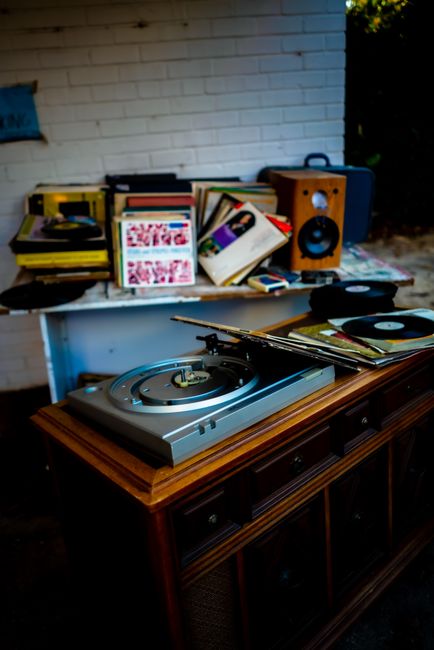
The in-car speaker became the iconic technology of the drive-in. Generations of Americans hooked the speaker over the window, adjusted the volume, and watched movies through that small, distinctive sound. The speakers were also famously fragile, and by the 1970s many theaters had transitioned to broadcasting the audio over a low-power FM radio signal that played through the car stereo. The radio system was technically much better — stereo, full frequency range, no fragile equipment — but it never quite captured the same feeling. Many older drive-in fans still talk about hooking the in-car speaker on the window and rolling the window halfway up against it.
If you forgot to take the speaker off the window when you drove away — and many people did, especially after a few hours of movies and snacks — you would hear a sickening crunch as you pulled out of your spot, the speaker tearing away from the cord and dragging along the ground. The drive-in operators replaced thousands of broken speakers a year, and the sound of a freshly broken speaker cord was, for many drive-in workers, one of the most familiar noises of the job.
드라이브인은 티켓 판매가 아닌 매점에서 대부분의 돈을 벌었습니다. 영화, 특히 저예산 B급 영화는 상대적으로 저렴하게 대여됐지만 매점에서 파는 간식은 엄청난 마진을 보였다. 만드는 데 8센트가 드는 팝콘 한 통이 50센트에 팔렸습니다. 종이컵에 담긴 코카콜라 가격은 몇 센트이며 1/4에 판매됩니다. 핫도그, 햄버거, 감자튀김, 사탕, 아이스크림 등 1955년 드라이브인의 매점은 영화관 스낵바라기보다는 작은 식당과 비슷했습니다. |||9월||| 가장 유명한 드라이브인 매점은 춤추는 핫도그, 춤추는 팝콘 상자, 춤추는 탄산음료 잔의 장면을 포함하는 두 장편 사이의 짧은 애니메이션 영화인 중간 휴식 만화였으며 모두 시청자가 매점을 방문하도록 유도했습니다. 노래하는 스낵이 행진하는 클래식 'Let's All Go to the Lobby' 노래는 1957년 Filmack Studios 제작을 위해 Dave Fleischer라는 애니메이터에 의해 만들어졌으며, 수십 년 동안 수백만 개의 드라이브인 영화 앞에서 상영되었다는 것만으로도 미국 역사상 가장 많이 재생된 음악 중 하나가 되었습니다. |||9월||| 매점까지 걸어가는 것은 특히 어린이들에게는 그 자체의 의식이 되었습니다. 쉬는 시간에 차에서 내려 따뜻한 어둠 속에 주차된 차들 사이를 걷고, 100피트 떨어진 곳에서 팝콘 냄새를 맡고, 긴 줄에 서서, 필요한 것보다 더 많은 음식을 주문하고, 군중 속에서 균형을 잡고 쟁반과 냅킨을 들고 뒤로 걸어갈 것입니다. 차로 돌아왔을 때는 두 번째 영화가 시작되고 있었고 밤은 완벽한 중간 지점에 도달했습니다. |||9월||| 드라이브 인은 미국 자동차와 떼려야 뗄 수 없는 존재였습니다. 1950년대와 1960년대 미국 세단의 거대한 벤치 좌석은 본질적으로 이동식 거실이었고, 드라이브인 경험을 가능하게 했습니다. 1957년 Chevrolet Bel Air, 1962년 Ford Galaxie, 1965년 Chevrolet Impala — 이 차량들은 몸을 쭉 뻗고 3시간 동안 편안하게 앉을 수 있도록 설계된 차량으로, 누구도 건드리지 않고 온 가족이 차 안에 들어갈 수 있습니다. 1980년대와 1990년대 소형 경제차가 보편화될 무렵에는 이미 드라이브인 경험이 답답하게 느껴지기 시작했고, 자동차 자체에도 부분적인 책임이 있었다. |||9월||| 드라이브 인은 또한 전후 교외 확장과 불가분의 관계였습니다. 귀환한 퇴역 군인들은 도시 가장자리의 새로운 구역에 집을 구입했습니다. 그들은 도시의 직장으로 출퇴근하기 위해 자동차를 구입했습니다. 그들에게는 자녀가 있었고, 아이들은 저녁에 갈 곳이 필요했습니다. 드라이브 인은 이 지형에 완벽하게 들어맞았습니다. 항상 도시 가장자리에 있었고 자동차로만 접근할 수 있었으며 베이비 시터나 정장, 조용한 행동 없이도 온 가족이 즐겁게 지낼 수 있었습니다. 영화관이 전쟁 전 도시의 오락이었던 것과 마찬가지로 드라이브인은 전후 교외의 오락이었습니다. |||9월||| 물론 드라이브 인은 십대들의 목적지로 유명했습니다. 데이트 중인 커플들은 다른 곳에서는 거의 얻을 수 없는 프라이버시를 찾을 수 있었고, 명목상 영화를 보고 있던 10대 소년 소녀들은 화면에 거의 관심을 기울이지 않는 경우가 많았습니다. '열정의 구덩이'라는 드라이브 인의 명성은 얻었고 완전히 과분한 것은 아니며 많은 베이비 붐 세대는 첫 키스, 로맨스에 대한 첫 어색한 시도, 여름 밤 드라이브 인에서 긴장한 사람과 처음으로 차에 앉은 것을 기억합니다. |||9월||| 드라이브인의 쇠퇴는 1960년대 후반부터 시작되어 1970년대와 1980년대를 거치면서 가속화되었습니다. 그것을 죽이기 위해 여러 세력이 모였습니다. 첫 번째는 부동산이었습니다. 많은 드라이브 인이 도시 경계 바로 바깥의 값싼 시골 땅에 지어졌고, 전후 붐으로 도시가 바깥으로 확장됨에 따라 같은 땅의 가치는 1948년보다 50배 또는 100배가 되었습니다. 1970년대 말에 계산은 간단했습니다. 20에이커의 교외 땅에서 드라이브 인을 하면 영화관으로 연간 4만 달러를 벌 수 있었고, 아파트나 스트립 몰을 짓기 위해 개발자에게 200만 달러에 팔 수 있었습니다. 대부분의 소유자는 결국 개발자의 수표를 받았습니다.
The most famous drive-in concession was the intermission cartoon, a short animated film between the two features that included scenes of dancing hot dogs, dancing popcorn boxes, and dancing soda cups, all encouraging viewers to visit the concession stand. The classic 'Let's All Go to the Lobby' jingle, with its singing snacks marching in formation, was created by an animator named Dave Fleischer for a Filmack Studios production in 1957, and it became one of the most-played pieces of music in American history simply by being shown before millions of drive-in features over decades.
The walk to the concession stand became its own ritual, especially for kids. You would get out of the car at intermission, walk through the rows of parked cars in the warm darkness, smell the popcorn from a hundred feet away, stand in a long line, order more food than you needed, and walk back balancing trays and napkins through the crowd. By the time you returned to the car, the second feature was starting, and the night had reached its perfect midpoint.
The drive-in was inseparable from the American car. The huge bench seats of 1950s and 1960s American sedans were essentially mobile living rooms, and they made the drive-in experience possible. A 1957 Chevrolet Bel Air, a 1962 Ford Galaxie, a 1965 Chevrolet Impala — these were vehicles designed for stretching out, sitting comfortably for three hours, fitting an entire family inside without anyone touching anyone else. By the time small economy cars became common in the 1980s and 1990s, the experience of the drive-in had already started to feel cramped, and the cars themselves were partly to blame.
The drive-in was also inseparable from the suburban expansion of the postwar years. Returning veterans bought houses in new subdivisions on the edges of cities. They bought cars to commute to jobs in the city. They had children, and the children needed places to go in the evenings. The drive-in fit perfectly into this geography — it was always on the edge of town, accessible only by car, and it could entertain the whole family without requiring babysitters or formal clothing or quiet behavior. The drive-in was the entertainment of the postwar suburbs, in the same way that the movie palace was the entertainment of the pre-war cities.
And of course the drive-in was famously a teenage destination. Couples on dates could find privacy that was almost impossible to get anywhere else, and teenage boys and girls who were nominally watching the movie were often paying very little attention to the screen. The drive-in's reputation as 'the passion pit' was earned and not entirely undeserved, and many baby boomers remember their first kiss, their first awkward attempt at romance, or their first time sitting in a car with someone they were nervous about, at a drive-in on a summer night.
The drive-in's slow decline began in the late 1960s and accelerated through the 1970s and 1980s. Several forces converged to kill it. The first was real estate. Many drive-ins had been built on cheap rural land just outside city limits, and as cities expanded outward in the postwar boom, that same land became worth fifty or a hundred times what it had been in 1948. By the late 1970s, the math was simple: a drive-in on twenty acres of suburban land could earn $40,000 a year as a movie theater, or it could be sold to a developer for two million dollars to build apartments or a strip mall. Most owners eventually took the developer's check.
두 번째 힘은 일광 절약 시간제였습니다. 1960년대와 1970년대에 미국이 일광 절약 시간제를 확대하면서 여름 저녁은 더 밝아졌습니다. 이는 드라이브 인에서 영화를 늦게까지(종종 저녁 9시까지) 시작할 수 없다는 것을 의미했습니다. 늦게 시작하면 늦게 끝나게 되었고, 오전 1시 30분에 끝나는 이중 장편은 어린 자녀가 있는 가족에게는 그다지 매력적이지 않았습니다. 출석률이 꾸준히 감소했습니다. |||9월||| 세 번째 힘은 홈 비디오였습니다. 1970년대 후반과 1980년대 초반에 VCR이 등장하면서 가족들은 집에서, 자신의 일정에 따라, 거실에서 영화를 볼 수 있게 되었습니다. 드라이브 인의 가장 큰 판매 포인트인 저렴하고 가족 친화적인 저녁 엔터테인먼트는 2달러에 영화를 대여하고 운전할 필요 없이 집에서 볼 수 있다는 점에서 직접적으로 약화되었습니다. |||9월||| 1990년까지 미국에는 드라이브 인이 1,000개 미만으로 남아 있었습니다. 2010년에는 그 수가 400개 미만으로 줄었습니다. 그리고 2020년까지 전국에서 여전히 운영되고 있는 드라이브인 매장은 약 305개에 불과합니다. 20년 동안 미국 엔터테인먼트의 지배적인 형태 중 하나였던 형식은 호기심이 되었고, 향수와 소수의 헌신적인 소유자들에 의해 주머니 속에 살아있게 되었습니다. |||9월||| 그리고 2020년이 왔습니다. 전염병으로 인해 전국의 실내 영화관이 폐쇄되자 드라이브인 극장은 갑자기 사회적 거리두기 시대에 완벽한 엔터테인먼트 형식처럼 보였습니다. 자동차는 그룹 간의 기본 분리를 제공했습니다. 실외 공기는 바이러스 전염 위험을 크게 줄였습니다. 할인은 창구를 통해 주문할 수 있습니다. 나머지 드라이브인 매장은 수십 년 만에 처음으로 여름 매진을 기록했으며, 수요를 충족하기 위해 폐쇄된 여러 장소가 일시적으로 다시 문을 열었습니다. |||9월||| 더욱 놀라운 점은 수십 년 만에 처음으로 새로운 드라이브인 매장이 개장되기 시작했다는 것입니다. 팝업 드라이브 인은 경기장, 쇼핑몰, 컨벤션 센터의 주차장에 나타났습니다. 40년 동안 존재하지 않았던 장소에 영구적인 새로운 드라이브 인이 문을 열었습니다. 2024년까지 미국에서 운영되는 드라이브 인 수는 약 305개에서 325개로 안정되었으며 매년 여러 개의 새로운 드라이브 인이 개장했습니다. 이는 전후 최고치를 위협할 만큼 충분하지는 않지만 대부분의 현재 고객의 생애 동안 이 형식이 처음으로 지속적인 성장을 보였습니다. |||9월||| 이 새로운 시대에 살아남고 번성한 드라이브인은 영화관 이상의 존재임을 배웠습니다. 현재 많은 곳이 콘서트 장소, 교환 모임, 주말 시장, 푸드 트럭 집회, 지역 사회 모임 공간으로 사용되고 있습니다. 화면이 중심이지만 경험은 영화보다 더 넓습니다. 일부는 사운드 시스템을 업데이트하고, 매점 메뉴를 확장하고, 수제 맥주(현지 법률이 허용하는 경우)를 추가하고, 대부분의 사람들이 쇠퇴기에 기억하는 버려진 구조물보다는 1950년대 드라이브인 전성기의 놀이터와 더 유사한 놀이터를 건설했습니다. |||9월||| 20년 동안 드라이브인을 가본 적이 없고 운전해서 갈 수 있는 거리에 살고 있다면 올해는 다시 돌아가야 할 해입니다. 당신이 사랑하는 몇 사람을 데려가십시오. 담요와 베개를 가져오세요. 매점에서 필요한 것보다 더 많은 음식을 주문하세요. 피곤하더라도 두 번째 기능을 유지하세요. 잃어버릴 뻔했던 경험은 소수의 전담 오퍼레이터에 의해 살아있게 되고 있으며, 이를 위해 할 수 있는 가장 강력한 일은 나타나는 것입니다. 그리고 당신이 그 일을 하면서 보내는 밤은 당신이 여름 내내 하는 가장 독특하고, 가장 미국적이고, 가장 이상하게 감동적인 일 중 하나가 될 것입니다. |||9월||| 전체 그림 |||9월||| 헤드라인
The third force was home video. The arrival of the VCR in the late 1970s and early 1980s meant that families could watch movies at home, on their own schedule, in their own living rooms. The drive-in's biggest selling point — the affordable, family-friendly evening of entertainment — was directly undercut by being able to rent a movie for two dollars and watch it at home with no driving required.
By 1990, the United States had fewer than 1,000 drive-ins remaining. By 2010, the number was below 400. And by 2020, only about 305 drive-ins still operated in the entire country. The format that had been one of the dominant forms of American entertainment for two decades had become a curiosity, kept alive in pockets by nostalgia and a small number of dedicated owners.
And then came 2020. When the pandemic shut down indoor movie theaters across the country, the drive-in suddenly looked like the perfect entertainment format for an era of social distancing. Cars provided built-in separation between groups. Outdoor air dramatically reduced viral transmission risk. Concessions could be ordered through windows. The remaining drive-ins saw their first sold-out summers in decades, and several closed locations were temporarily reopened to meet the demand.
More surprising, new drive-ins started opening for the first time in decades. Pop-up drive-ins appeared in parking lots of stadiums, malls, and convention centers. Permanent new drive-ins opened in places they had not existed in forty years. By 2024, the number of operating drive-ins in the United States had stabilized around 305 to 325, with several new ones opening each year — not enough to threaten the postwar peak, but the first sustained growth the format had seen in the lifetimes of most of its current customers.
The drive-ins that have survived and thrived in this new era have learned to be more than movie theaters. Many now serve as concert venues, swap meets, weekend markets, food truck rallies, and community gathering spaces. The screen is the centerpiece, but the experience is broader than just the movie. Some have updated their sound systems, expanded their concession menus, added craft beer (where local laws allow), and built playgrounds that look more like the ones at the height of the 1950s drive-in than like the abandoned structures most people remember from the decline years.
If you have not been to a drive-in in twenty years and you live within driving distance of one, this is the year to go back. Take a few people you love. Bring a blanket and some pillows. Order more food than you need from the concession stand. Stay for the second feature even if you are tired. The experience that was almost lost is being kept alive by a small number of dedicated operators, and the most powerful thing you can do for it is to show up. And the night you spend doing it will be one of the most distinctive, most American, most strangely moving things you do all summer.