
Researchers Identify Protein That May Contribute to Parkinson's Spread
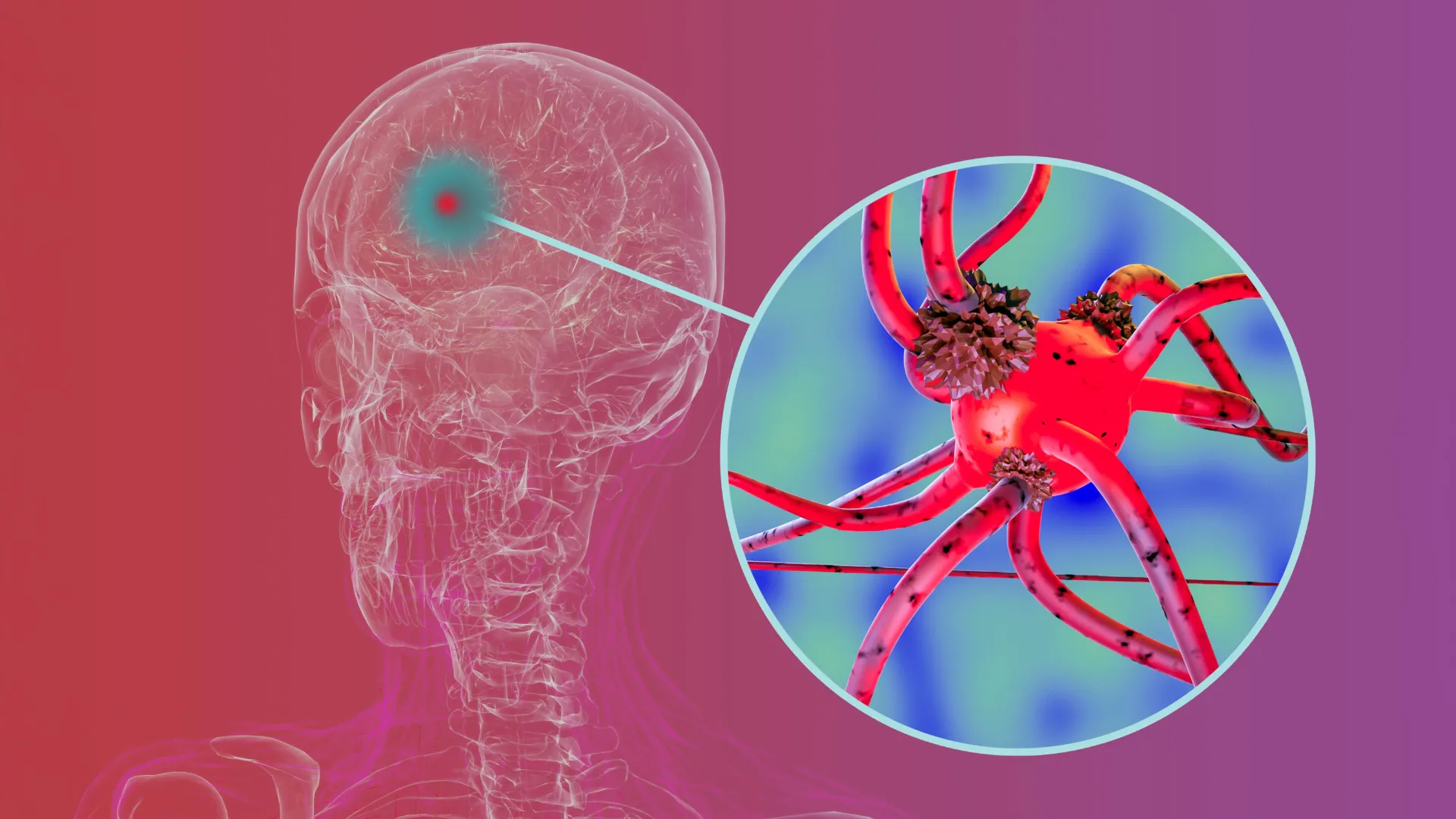
Researchers have identified a protein called GPNMB that may play a role in the spread of Parkinson's disease through the brain. In experiments, blocking this protein stopped the toxic process from spreading between cells.
Researchers have made a discovery that could potentially slow the progression of Parkinson's disease. A newly identified protein called GPNMB may play a major role in helping the disease spread through the brain.
The protein is released by immune cells in response to damaged neurons, creating a cycle that speeds up brain cell degeneration. In early experiments, researchers found that antibodies that blocked GPNMB stopped the toxic process from spreading between cells.
This finding could lead to new treatments for Parkinson's disease, which affects millions of people worldwide. The discovery of GPNMB's role in the disease's progression is a significant step forward in understanding how Parkinson's spreads through the brain.
Go Deeper
What is GPNMB and how is it related to Parkinson's disease?
GPNMB is a protein that is released by immune cells in response to damaged neurons, and it may play a role in the spread of Parkinson's disease through the brain.
How did researchers discover the role of GPNMB in Parkinson's disease?
Researchers discovered the role of GPNMB through experiments in which they blocked the protein using antibodies and observed the effect on the spread of the disease.
What are the potential implications of this discovery for Parkinson's treatment?
The discovery of GPNMB's role in Parkinson's disease could lead to new treatments that target the protein and slow the progression of the disease.
How common is Parkinson's disease and who is affected?
Parkinson's disease affects millions of people worldwide, and it is a significant cause of disability and death in older adults.
What is the current state of research into Parkinson's disease and its treatment?
Research into Parkinson's disease is ongoing, and scientists are working to understand the causes of the disease and to develop new treatments that can slow or stop its progression.
More health
 health50+
Mental Stimulation May Reduce Alzheimer's Risk
A lifetime of mental stimulation may help protect the brain as we age. People with high levels of cognitive enrichment had a lower risk of Alzheimer's
Jul 17 health50+
Study Links High Meat Consumption to Lower Alzheimer’s Risk for Some Genetic Groups
A new study suggests that older adults with high-risk APOE gene variants may experience slower cognitive decline if they eat high amounts of meat. The
Jul 16 health
CDC Reports Over 400 Sickened in Cyclospora Parasite Outbreak
The Centers for Disease Control and Prevention has reported that a cyclospora parasite outbreak has sickened over 400 people across four states. Inves
Jul 16