
Scientists Transfer Longevity Gene from Naked Mole Rats to Mice

Scientists at the University of Rochester have successfully transferred a longevity-related gene from naked mole rats to mice. The modified mice showed improved health and longer lifespans.
Scientists at the University of Rochester have made a significant breakthrough in their experiment involving the transfer of a longevity-related gene. They transferred this gene from the naked mole rat, known for its long lifespan, into mice. The results showed that the mice lived longer and were healthier. The special gene is responsible for boosting the production of a substance called high molecular weight hyaluronic acid. This substance appears to have several health benefits, including protection against cancer, reduction of inflammation, and support for healthier aging. The mice that received the gene transfer demonstrated stronger resistance to tumors, had healthier guts, and lower levels of age-related inflammation. This experiment could potentially lead to new insights into the aging process and ways to promote healthier aging in humans.
Go Deeper
What is the significance of the naked mole rat in this experiment?
The naked mole rat is used in this experiment because of its famously long lifespan, making it an ideal subject for studying longevity. Scientists are trying to understand what makes these animals live longer and how they can apply this knowledge to other species, including humans.
What is high molecular weight hyaluronic acid and what are its benefits?
High molecular weight hyaluronic acid is a substance that appears to protect against cancer, reduce inflammation, and support healthier aging. It is produced in higher amounts in the modified mice due to the transferred gene, leading to improved health outcomes.
How did the modified mice show improved health?
The modified mice showed stronger resistance to tumors, had healthier guts, and lower levels of age-related inflammation. These changes suggest that the transferred gene had a positive impact on the overall health of the mice.
What are the potential implications of this experiment for human health?
This experiment could potentially lead to new insights into the aging process and ways to promote healthier aging in humans. By understanding how the longevity-related gene works, scientists may be able to develop new treatments or therapies to improve human health and increase lifespan.
What's next for this research?
The next steps for this research could involve further studying the effects of the longevity-related gene in different species, including humans. Scientists may also explore ways to use this knowledge to develop new treatments for age-related diseases.
More health
 health50+
Mental Stimulation May Reduce Alzheimer's Risk
A lifetime of mental stimulation may help protect the brain as we age. People with high levels of cognitive enrichment had a lower risk of Alzheimer's
Jul 17 health50+
Researchers Identify Protein That May Contribute to Parkinson's Spread
Os pesquisadores identificaram uma proteína chamada GPNMB que pode desempenhar um papel na propagação da doença de Parkinson através do cérebro. Em experimentos, blocki |||SET||| 16 de julho |||SET||| Estudo relaciona alto consumo de carne à redução do risco de Alzheimer em alguns grupos genéticos |||SET||| Um novo estudo sugere que adultos mais velhos com variantes do gene APOE de alto risco podem experimentar um declínio cognitivo mais lento se comerem grandes quantidades de carne. O |||SET||| 50 Plus Hub é o seu portal diário em estilo de jornal para uma vida inteligente após os 50: orientações úteis, jogos, ferramentas, ofertas e ajuda em inglês simples. |||SET||| Tópicos |||SET||| Por Década |||SET||| Na casa dos 50 anos |||SET||| Em seus 60 anos |||SET||| Em seus 70 anos |||SET||| 80 e além |||SET||| Jogos e ferramentas |||SET||| Jogo de memória |||SET||| Cadeia de recall |||SET||| Noite de TV |||SET||| Curiosidades Bíblicas |||SET||| Saúde e bem-estar |||SET||| Alertas Médicos |||SET||| Seguro de Vida |||SET||| Planos de telefonia celular |||SET||| Proteção de Identidade
Jul 16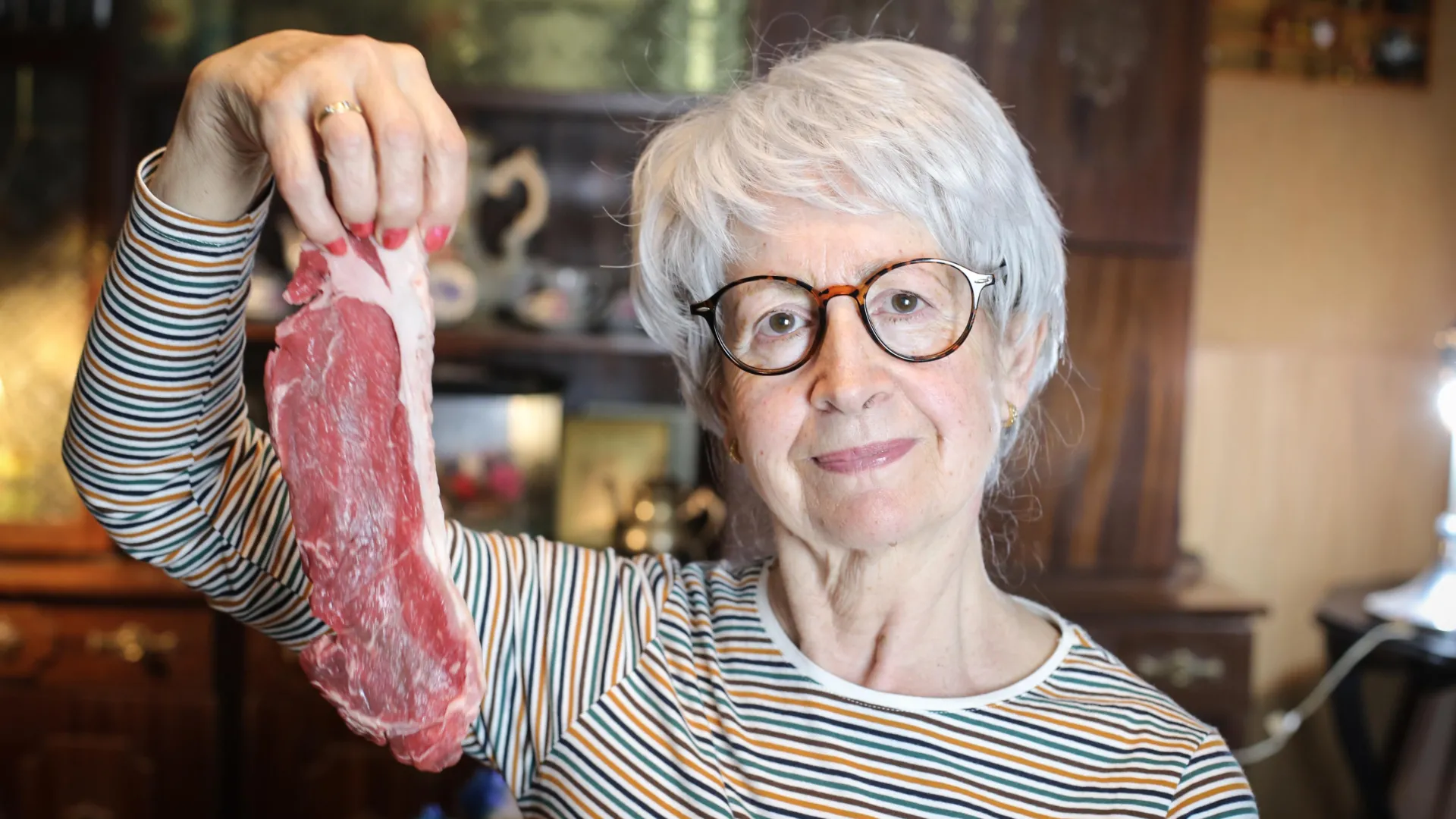 health50+
Study Links High Meat Consumption to Lower Alzheimer’s Risk for Some Genetic Groups
A new study suggests that older adults with high-risk APOE gene variants may experience slower cognitive decline if they eat high amounts of meat. The
Jul 16