
T. rex teeth suggest warm body temperature
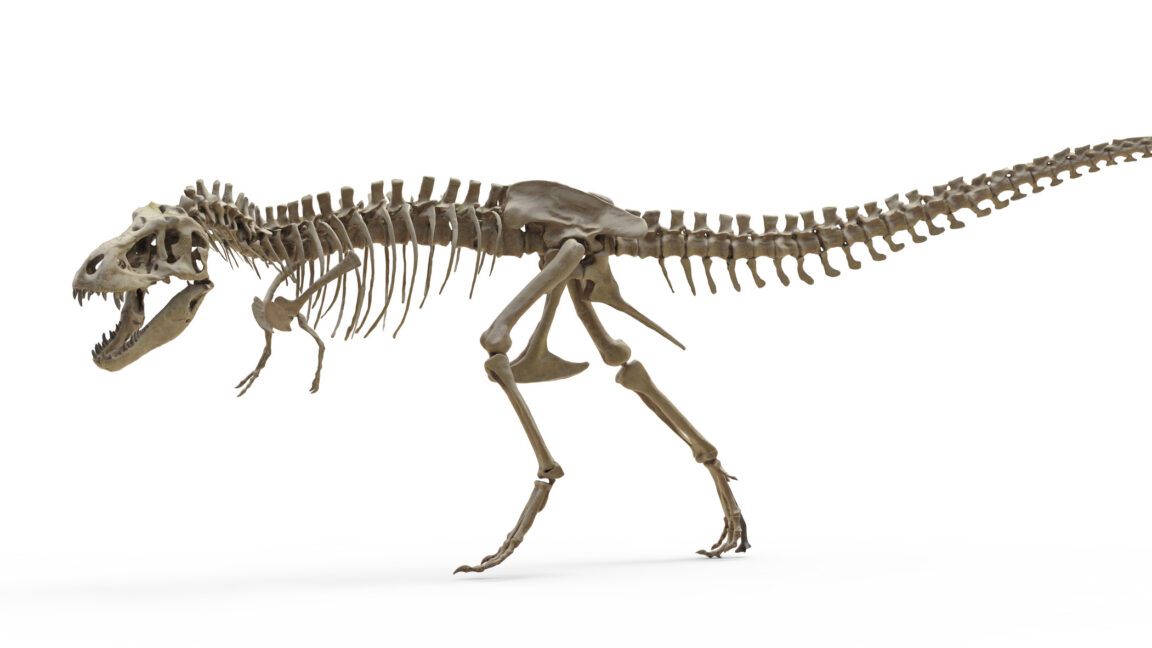
Researchers have found that the teeth of Tyrannosaurus rex indicate the dinosaur had a warm body temperature. This discovery was made possible by analyzing isotope ratios in the teeth.
Scientists have made a new discovery about the body temperature of Tyrannosaurus rex. By examining the isotope ratios in the dinosaur's teeth, they found that T. rex may have had a warm body temperature, similar to that of an elephant. This suggests that the giant dinosaur was able to regulate its own body temperature, rather than being solely dependent on external sources of heat.
The isotope ratios in the teeth provide a hint about the dinosaur's thermoregulation abilities. According to the researchers, this finding indicates that T. rex was actively managing its body temperature, which would have allowed it to be more active and hunt more efficiently. The discovery sheds new light on the biology and behavior of one of the most iconic dinosaurs to have existed.
The study of isotope ratios in fossilized teeth is a relatively new field of research, but it has already provided valuable insights into the lives of ancient animals. By analyzing the ratios of different isotopes, scientists can learn about the diet, habitat, and physiology of long-extinct creatures. In the case of T. rex, the isotope ratios in its teeth suggest that it was a highly efficient and adaptable predator.
Go Deeper
What is the significance of isotope ratios in fossilized teeth?
Isotope ratios in fossilized teeth can provide information about an animal's diet, habitat, and physiology. They can also offer clues about the animal's thermoregulation abilities and overall biology.
How do scientists analyze isotope ratios in fossilized teeth?
Scientists use specialized equipment to analyze the ratios of different isotopes in fossilized teeth. This involves measuring the amounts of specific isotopes, such as oxygen or carbon, and comparing them to standards.
What does the discovery of T. rex's warm body temperature reveal about its behavior?
The discovery suggests that T. rex was an active and efficient predator, capable of regulating its own body temperature. This would have allowed it to hunt and thrive in a variety of environments.
How does the body temperature of T. rex compare to that of modern animals?
The body temperature of T. rex is estimated to be similar to that of an elephant, which is a large and efficient mammal. This suggests that T. rex was able to regulate its body temperature in a way that is similar to some modern animals.
What are the implications of this discovery for our understanding of dinosaur biology?
The discovery of T. rex's warm body temperature provides new insights into the biology and behavior of dinosaurs. It suggests that some dinosaurs were able to regulate their own body temperature, which would have allowed them to be more active and adaptable in their environments.
More technology
 technology
Meta Introduces Muse AI Assistant with New Mac App
Meta has launched Muse, an AI assistant with a new Mac app that can access various user data. The app has raised some concerns due to its access to pe
Sep 20 technology
Cable Television Remains a Dominant Force
Despite the rise of streaming platforms, cable television continues to be a major player in the entertainment industry. Many streaming services are no
Sep 20 technology
Human Error Remains Top Cybersecurity Risk to Energy Systems
Energy systems are vulnerable to cyberattacks, with human error being a significant factor. Experts warn that the risk of cyberattacks is growing, pos
Sep 20