
Farmed Salmon Nutrition May Be Declining
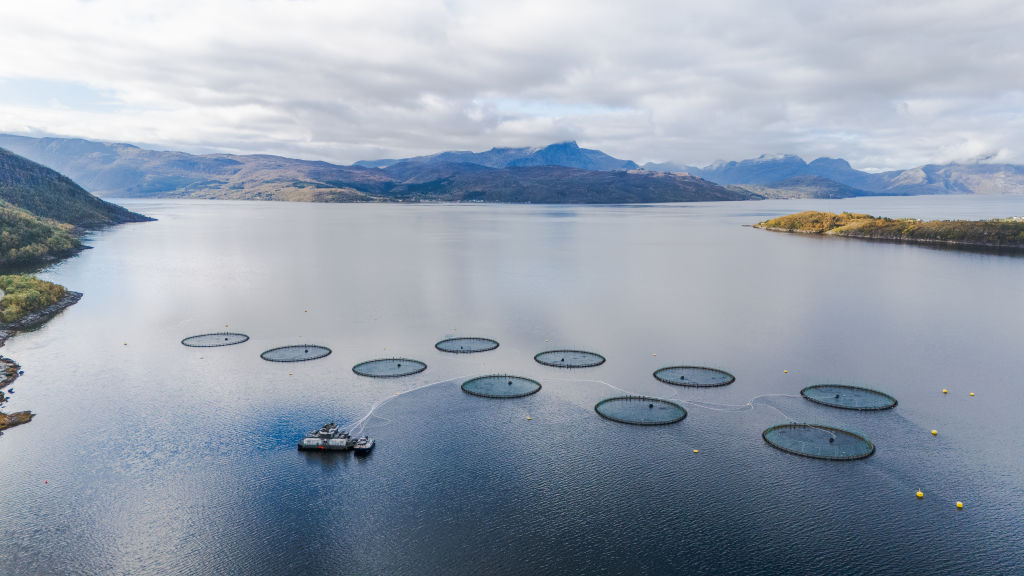
New research suggests that farmed salmon may not be as nutritious as it once was. The shift in the fish's diet is having downstream impacts on the environment and climate.
Researchers have found that farmed salmon may not be as nutritious as it once was. This change is attributed to a shift in the fish's diet.
The fish's diet is having significant downstream impacts on the environment and climate. According to the research, these impacts are a result of the changes in the salmon's food source.
The study's findings suggest that the nutrition levels in farmed salmon have declined over time. This decline is likely due to the changes in the fish's diet and environment.
The research highlights the need for further study on the effects of diet changes on farmed salmon. It also underscores the importance of considering the environmental impacts of large-scale fish farming.
More research is needed to fully understand the effects of the shift in the fish's diet on the nutrition levels of farmed salmon and the environment.
Go Deeper
What is causing the decline in farmed salmon nutrition?
The decline in farmed salmon nutrition is attributed to a shift in the fish's diet. This shift is having significant downstream impacts on the environment and climate.
How is the environment impacted by the shift in the fish's diet?
The shift in the fish's diet is having significant downstream impacts on the environment and climate, including effects on the ecosystem and greenhouse gas emissions.
What are the implications of the decline in farmed salmon nutrition for human health?
The decline in farmed salmon nutrition may have implications for human health, as salmon is a common source of essential nutrients like omega-3 fatty acids.
Can the nutrition levels in farmed salmon be improved?
Yes, the nutrition levels in farmed salmon can be improved by changing the fish's diet and environment. However, more research is needed to determine the best approaches.
What further research is needed to understand the effects of the shift in the fish's diet?
More research is needed to fully understand the effects of the shift in the fish's diet on the nutrition levels of farmed salmon and the environment. This includes studying the impacts on the ecosystem and human health.
More health
 health50+
Study links more than five daily coffees to lower bone density in women 65 and older
Flinders University researchers followed 9,704 women age 65 and older for 10 years and found drinking more than five cups of coffee a day was tied to
Sep 6 health50+
Early statin use after type 2 diabetes diagnosis linked to 15% lower dementia risk
A Danish study of 132,585 adults found starting a statin within one year of a type 2 diabetes diagnosis was tied to a 15% lower relative risk of demen
Sep 6 health50+
Hormone therapy started between ages 46 and 56 linked to lower dementia risk in UK study
UK Biobank data on 183,450 postmenopausal women linked hormone replacement therapy to about a 10% lower risk of all-cause dementia over 13 years. Star
Sep 6