
Researchers Use Thunderstorms and Fiber-Optic Cables for Seismic Imaging
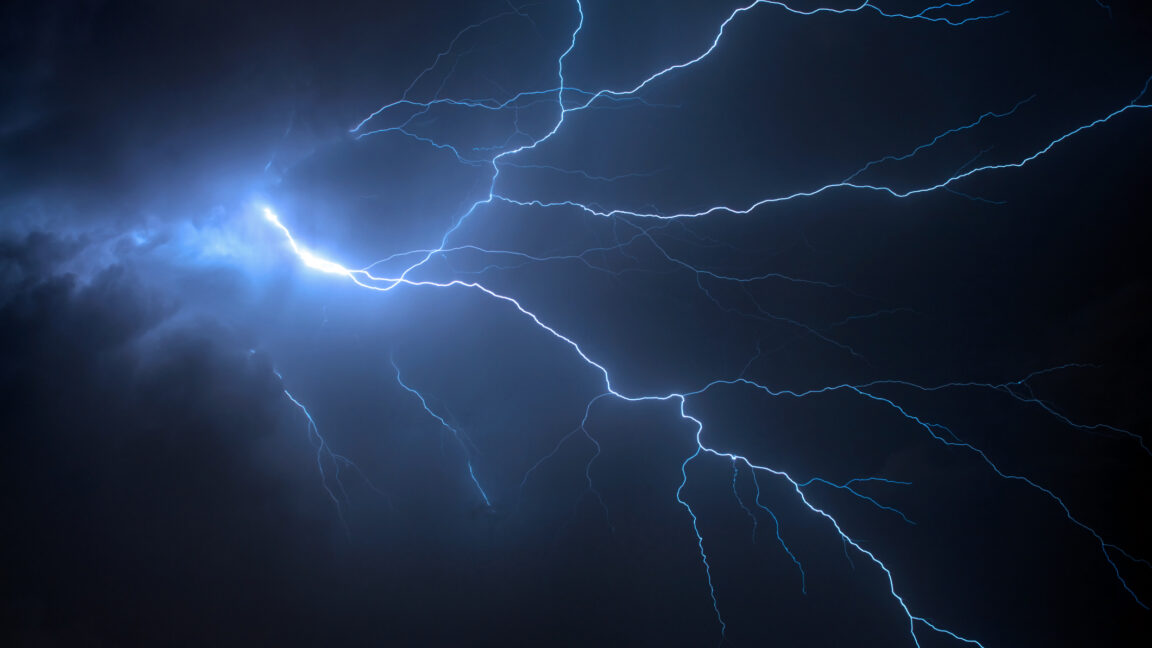
Scientists are utilizing thunderstorms to generate seismic waves that can help identify subsurface features. This innovative approach combines natural seismic activity with advanced fiber-optic cabling technology to produce detailed images of the Earth's subsurface.
Thunderstorms have the ability to produce seismic waves, which can be harnessed to locate and map subsurface features. By leveraging this natural phenomenon, researchers can gain valuable insights into the Earth's internal structure. The integration of fiber-optic cabling into this process enables the collection of highly accurate data, allowing for the creation of detailed seismic images. This technology has the potential to revolutionize the field of seismic imaging, providing a new tool for scientists to study the Earth's subsurface. The use of thunderstorms as a seismic source is a novel approach that could complement traditional methods, offering a more efficient and cost-effective way to gather seismic data. As this technology continues to develop, it may lead to breakthroughs in our understanding of the Earth's internal dynamics and the discovery of new subsurface features.
Go Deeper
How do thunderstorms generate seismic waves?
Thunderstorms produce seismic waves through the rapid expansion of air along the path of a lightning bolt, which creates a shockwave that travels through the Earth's surface. This shockwave can be detected by sensitive instruments, such as seismometers or fiber-optic cables.
What are the benefits of using fiber-optic cabling for seismic imaging?
Fiber-optic cabling offers several advantages, including high sensitivity, accuracy, and the ability to collect data over long distances. This makes it an ideal technology for detecting and recording seismic waves generated by thunderstorms.
What kind of subsurface features can be identified using this technology?
This technology can be used to identify a variety of subsurface features, including underground caverns, fault lines, and mineral deposits. By analyzing the seismic waves generated by thunderstorms, researchers can create detailed images of the Earth's subsurface, revealing its internal structure and composition.
Is this technology currently being used in any real-world applications?
While this technology is still in the early stages of development, it has the potential to be used in a variety of fields, including geology, mining, and environmental monitoring. As the technology continues to evolve, it may become a valuable tool for scientists and industries seeking to understand and explore the Earth's subsurface.
How does this technology compare to traditional seismic imaging methods?
This technology offers a novel approach to seismic imaging, one that is potentially more efficient and cost-effective than traditional methods. By leveraging the power of thunderstorms, researchers can gather seismic data without the need for expensive and complex equipment, making it a promising alternative for certain applications.
More technology
 technology
Amazon Raises Prices for Echo, Fire TV, and Kindle Products
Amazon has increased prices for several of its products, including Echos, Kindles, and Fire TVs, due to rising component costs. The price hikes range
Aug 23 technology
Taiwan's Satellite Launcher Development Hits Setback
Taiwan's effort to develop its own satellite launcher has encountered a setback. The country's space program is working to overcome the issue and cont
Aug 23 technology
FTC Considers Personalized Pricing Regulations
The Federal Trade Commission is reviewing personalized pricing practices. Some critics argue that potential regulations could increase costs for consu
Aug 22