
US National Debt Reaches $40 Trillion
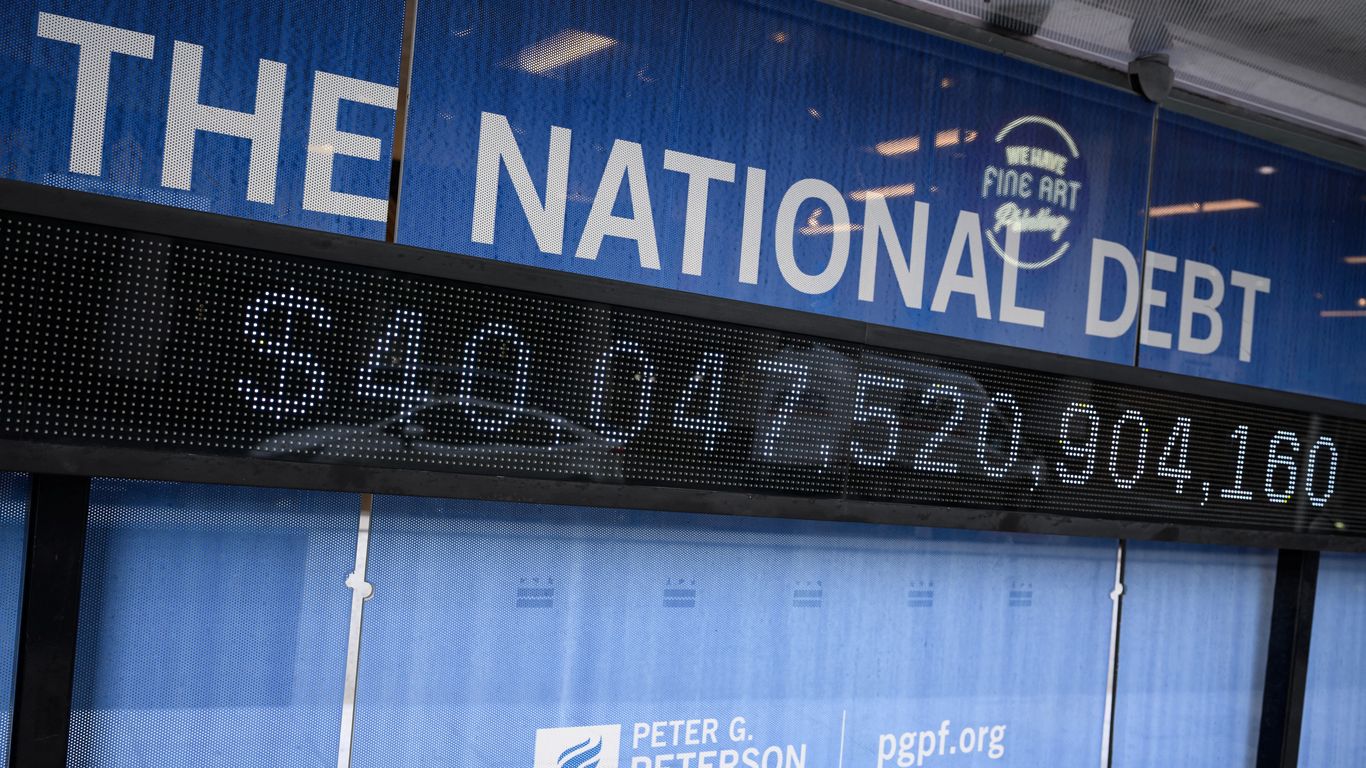
The US national debt has surpassed $40 trillion, prompting concerns about the potential impact on Americans' finances. Rising debt could lead to increased taxes, reduced spending, or changes to federal benefits.
The US national debt reached $40 trillion for the first time on Wednesday. This figure includes debt the government owes itself, but economists typically focus on the roughly $32 trillion held by the public when assessing the debt's effect on the economy. President Trump's tax-and-spending law is projected to add trillions to federal deficits over the next decade, while the White House has sought additional funding for the Iran war.
Higher national debt could make mortgages, student loans, and small-business borrowing more expensive by putting upward pressure on interest rates. As the US debt grows, investors could demand higher yields if they become less confident in the government's fiscal position. This could lead to increased borrowing costs for expansion, hiring, and investment. Mortgage rates, for example, tend to move closely with the yield on the 10-year Treasury note, which reflects the return investors demand to lend money to the federal government.
The growing national debt also poses inflation risks if investors begin to fear that policymakers will rely on inflationary measures to deal with the government's fiscal problems. As the national debt grows, the federal government must devote more money to interest payments, leaving lawmakers with less room to fund priorities such as defense, infrastructure, and education. The federal government is projected to spend over $1 trillion on net interest in 2026, more than it will spend on any mandatory program other than Social Security or Medicare.
Go Deeper
What is the current US national debt?
The US national debt has surpassed $40 trillion, with approximately $32 trillion held by the public.
How could the rising national debt affect Americans?
Rising debt could lead to increased taxes, reduced spending, or changes to federal benefits, as well as higher interest rates on mortgages, student loans, and small-business borrowing.
What is the impact of higher national debt on interest rates?
Higher national debt could lead to increased interest rates as investors demand higher yields due to reduced confidence in the government's fiscal position.
How does the national debt affect the federal government's spending?
As the national debt grows, the federal government must devote more money to interest payments, leaving lawmakers with less room to fund priorities such as defense, infrastructure, and education.
What is the projected spending on net interest in 2026?
The federal government is projected to spend over $1 trillion on net interest in 2026, more than it will spend on any mandatory program other than Social Security or Medicare.
More politics
 politics
CIA Director John Ratcliffe Proposes Trump-Putin-Zelensky Summit
CIA Director John Ratcliffe proposed a trilateral meeting between President Trump, Russian President Putin, and Ukrainian President Zelensky during hi
Sep 5 politics
Beverly Vance Discusses 'Hillbilly Elegy' Film Rights Payment
Beverly Vance, mother of JD Vance, has spoken about the payment she received for the film rights to 'Hillbilly Elegy'. She expressed satisfaction with
Sep 5 politics
Patrick Clancy Comments on Prospect of Another Trial
Patrick Clancy spoke out after a hung jury led to a mistrial in his wife Lindsay Clancy's murder case. He expressed concerns about the possibility of
Sep 5