
There was a time when crossing the country meant a slow journey on two lane roads that wound through every small town along the way. You could smell the coffee from the diners and feel the dust from the farms as you crept along at 45 miles per hour.
That all changed on June 29, 1956, when President Dwight D. Eisenhower signed the Federal Aid Highway Act. This law authorized the construction of 41,000 miles of high speed roads.
It shifted the American experience from the local Main Street to the superhighway, forever altering how we live and vacation.
The Pre-Interstate Era
Before 1956, long distance travel was a gritty adventure that tested the patience of any family. The primary routes were roads like U.S. Route 66 or the Lincoln Highway, which passed directly through the centers of thousands of towns.
Drivers faced stoplights, school crossings, and heavy local traffic at every mile. A trip from Chicago to Los Angeles could take several days. The roads were often narrow and poorly paved in rural areas.
Motorists had to plan carefully for gas stations that stayed open late. It was a slower pace, but it connected travelers directly to the local communities they passed.
The 1956 Highway Act
Eisenhower signed the Federal Aid Highway Act into law to create a National System of Interstate and Defense Highways. The federal government paid 90 percent of the construction cost.
The initial budget was 25 billion dollars over 12 years. Engineers designed the system with specific standards. They required lanes to be 12 feet wide. There had to be a 10 foot right of way on each side.
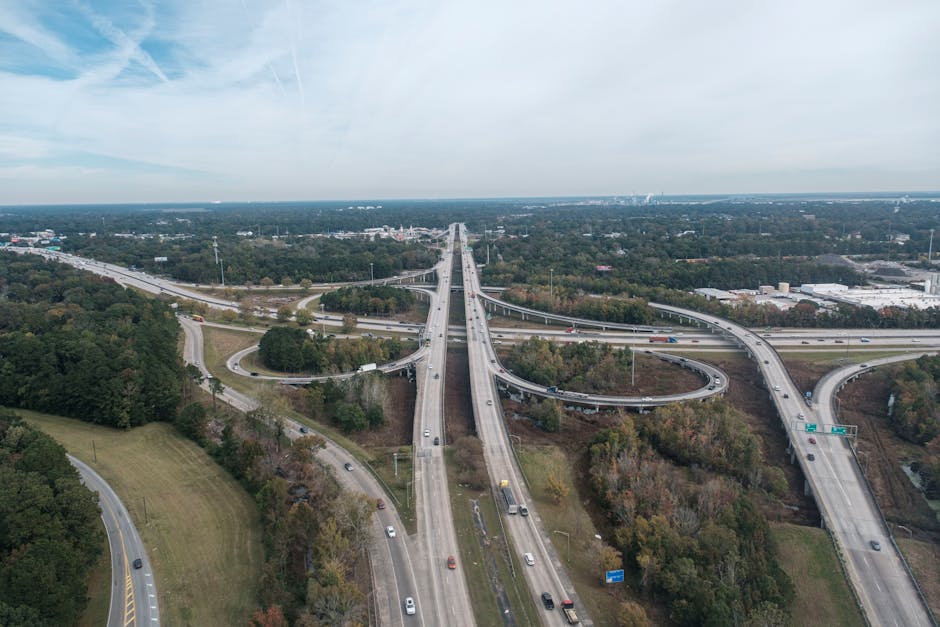
The roads were designed to be free of intersections. Overpasses and underpasses replaced traffic lights. This design allowed traffic to move at sustained high speeds without stopping.
It was the largest public works project in American history at the time.
Travel Costs Then and Now
The financial cost of travel has shifted dramatically over the decades. In 1956, the average price of a gallon of gasoline was 29 cents. Adjusted for general inflation, that equals about 3 dollars today.
However, gas prices often fluctuate above that adjusted figure. A night in a roadside motel typically cost between 5 and 8 dollars. Today, that same room averages 130 dollars per night.
While fuel efficiency has improved since the 1950s, the overall cost of a road trip has risen significantly when you factor in lodging and food. Modern travelers must budget more carefully for these expenses than their parents did.
The Rise of Roadside Culture
The Interstate system gave birth to a new culture of chain restaurants and standardized lodging. Businesses moved away from town centers to locate near the interstate exits.
Holiday Inn, which started in 1952, exploded in popularity by placing signs at every exit promising a familiar room. Fast food chains like McDonald's followed the drivers.
Stuckey's became a famous stop for pecan logs and souvenirs. This shift offered consistency and predictability. Travelers knew exactly what to expect when they stopped for a meal or a bed.
It removed some of the local flavor but added a layer of convenience for the hurried driver.
Safety Improvements Over Time
Safety is the most significant improvement the interstates brought to American driving. In the mid 1950s, the fatality rate on roads was roughly 6 deaths per 100 million vehicle miles traveled.
The controlled access of the interstate eliminated head on collisions and intersections, which were major causes of accidents. Modern vehicles now include seatbelts, airbags, and crumple zones.
By 2020, the fatality rate had dropped to about 1.3 deaths per 100 million miles. While the total number of miles driven has skyrocketed, the risk of dying on a trip has plummeted.
The roads are safer now than at any point in history.
Planning Your Trip Today
Planning a road trip today involves different tools than the paper maps of the past. Drivers now rely on GPS apps and real time traffic data to avoid delays. The American Automobile Association, or AAA, still offers TripTik planning services but now delivers them digitally.
It is wise to check your vehicle before leaving. Ensure your tires are properly inflated and your fluids are topped off. Budget for tolls, which have become common on many interstate sections to pay for maintenance.
Despite the higher costs, the freedom of the open road remains a vital part of American life for those over 50.
Road Trip Essentials Comparison
| Item | 1950s Cost | Modern Cost |
|---|---|---|
| Gallon of Gas | $0.29 | $3.50 |
| Motel Room | $6.00 | $130.00 |
| Restaurant Dinner | $2.50 | $20.00 |
| Car (New Average) | $2,000 | $48,000 |
| Road Map | $0.50 | Free (Digital) |
The American road trip has evolved from a dusty trek into a comfortable journey. We traded the winding two lane roads for the efficiency of the interstate. We gave up some of the local charm for safety and speed.
Yet the desire to see what lies over the horizon remains the same. As we age, the road offers a chance to reflect and reconnect. It is a reminder that the journey itself is often more important than the destination.
So pack your bags, check the tires, and see where the road takes you next.
Sources
- Federal Highway Administration, 'The Dwight D. Eisenhower System of Interstate and Defense Highways,' U.S. Department of Transportation (2023)
- U.S. Energy Information Administration, 'Annual Energy Outlook 2024,' U.S. Department of Energy (2024)
- National Highway Traffic Safety Administration, 'Fatality Analysis Reporting System,' U.S. Department of Transportation (2022)
- American Automobile Association, 'Your Driving Costs,' AAA (2023)