
Knitting
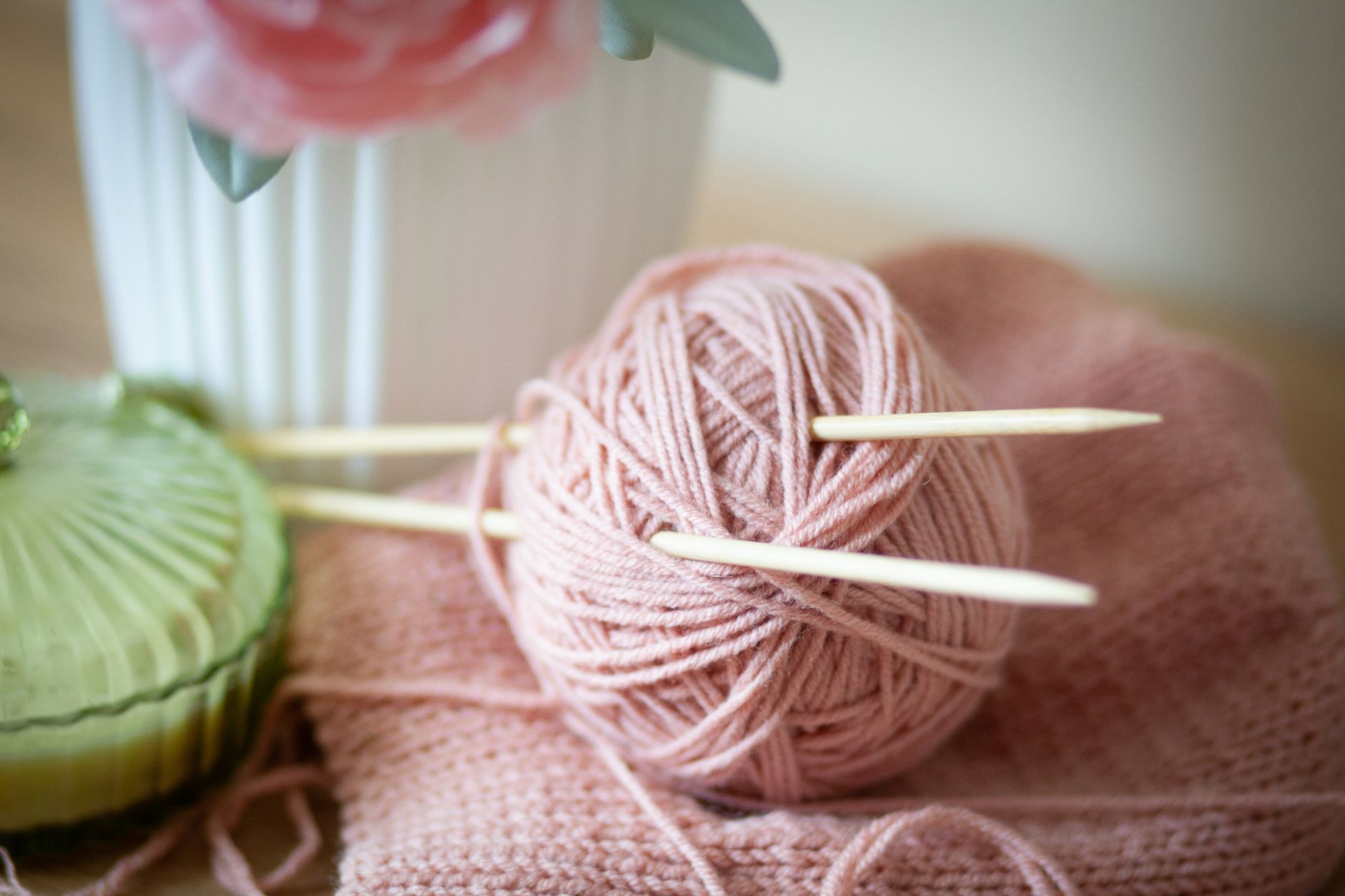
Knitting keeps the fingers nimble and gives you something warm and useful at the end. It travels well and pairs perfectly with a favorite show.
What you need to start
- A pair of medium knitting needles
- A skein of worsted weight yarn
- A pair of scissors
- A yarn needle for finishing
At a glance
Your learning path
Three stages, taken at your own pace. Start at the top, get comfortable, then move down as you grow. There is no rush, and no wrong place to begin.
Never held a pair of needles? Start right here. These four walk you through casting on, the knit and purl stitches, and your very first scarf, slow and clear, so you finish something real and feel proud doing it.
Knitting Help - Long Tail Cast-On
VeryPink KnitsThe KNIT STITCH for Total Beginners
Sheep & StitchHow to PURL STITCH for Total Beginners
Sheep & StitchHow to Knit a Scarf for Beginners Step By Step
Sheep & StitchOnce the knit and purl feel natural, these help you read a pattern, shape your work with increases and decreases, knit around in a circle, make a real hat, and calmly fix the slips that happen to everyone.
How to read knitting patterns and follow written instructions [for beginners]
NimbleNeedlesHow to Do Common Knitting Increases and Decreases | M1R, M1L, K2TOG & SSK
Marianne | Maymade KnitsHOW TO KNIT IN THE ROUND for Beginners (Step-by-Step)
Sheep & StitchHow to KNIT A HAT on STRAIGHT NEEDLES for Beginners (Step-by Step)
Sheep & StitchKnitting Help - Correcting a Dropped Stitch
VeryPink KnitsReady to make heirlooms? These tackle the showpiece techniques, cables, lace, two-color Fair Isle, socks, and a full sweater, each broken down so a patient knitter can absolutely do them.
How to Knit Cables Video Tutorial
Leelee KnitsHow to knit lace in 3 easy steps - Lace for beginners
So WoollyHow to Knit Stranded Colorwork (Fair Isle Knitting)
WEBS - America's Yarn StoreHOW TO KNIT SOCKS: The Ultimate Beginner Guide to Sock Knitting (Step-by-Step Tutorial)
Sheep & Stitchknit your first sweater! free pattern & detailed tutorial
handmade by florenceWhy knitting is wonderful after 50
Knitting is one of the kindest hobbies you can give yourself after 50. The steady, repeating motion keeps your hands and fingers limber and helps maintain dexterity, while the rhythm itself is deeply calming, many knitters say it quiets the mind the way a slow walk does and even helps lower stress before bed. It is gentle on the body, easy to pick up and put down, and gives you a finished gift to be proud of. Best of all, it is wonderfully social: knitting circles, yarn shops, and online groups welcome newcomers warmly, so it is just as much about good company as it is about cozy scarves.
Your first month, week by week
Get comfortable holding the yarn and needles. Practice casting on 20 stitches and the knit stitch over and over on cheap, light-colored worsted yarn. Do not worry about mistakes, just keep your hands moving until the motion feels familiar.
Learn the purl stitch and knit a small practice swatch in garter stitch (knit every row). Notice the difference between the smooth knit V and the bumpy purl. End the week by practicing how to bind off so you can finish a piece.
Start your first real project: a simple garter-stitch scarf. Cast on, slip the first stitch of each row for tidy edges, and knit a little every day. This is where the relaxing rhythm really sets in.
Finish and bind off your scarf, then weave in the loose ends with a tapestry needle. Try combining knits and purls in one row (like a rib) to prepare for hats and patterns. Celebrate, you are now a knitter.
Common mistakes to avoid
- Casting on too tightly, which makes the first row almost impossible to knit. Cast on over two needles held together, or onto a needle one or two sizes larger, then slide it out. Keep your stitches loose enough to slide easily.
- Accidentally adding stitches so your rows keep getting wider. This usually means you wrapped the yarn over the needle and counted it as a stitch, or knit into the gap. Count your stitches at the end of every row until it becomes second nature.
- Dropped stitches that run down and leave a hole or ladder. Stop and stay calm. Use a crochet hook to catch the loose loop and pull each ladder rung through, working back up to the needle. Putting a stitch marker or safety pin in a dropped stitch keeps it from running further.
- Accidental yarn-overs that create unwanted eyelet holes. Make sure the working yarn sits behind the needle for a knit stitch and in front for a purl. If you see an extra loop that is not a real stitch, drop it off the needle before working it.
- Uneven, lumpy tension where some stitches are tight and others loose. Tension evens out with practice, so do not chase perfection early. Relax your grip, keep an even pace, and avoid yanking the yarn after each stitch.
- Splitting the yarn so the stitch looks fuzzy and frayed. Use needles with a slightly rounded tip for plied yarn, slow down, and insert the needle cleanly through the whole loop rather than through the middle of the strands.
Make it easier on your body
Simple ways to keep knitting comfortable and safe with arthritis, low vision, or limited mobility.
- Sore or arthritic hands gripping thin metal needles. Switch to lightweight bamboo or wood needles, which are warmer, less slippery, and far gentler on the joints. Square-profile (ergonomic) needles rest more comfortably in stiff fingers than round ones.
- Hand fatigue from long sessions and fine yarn. Use larger needles with chunky or bulky yarn so each stitch counts for more and a project grows fast with fewer movements. Take a short stretch break every 20 to 30 minutes.
- Trouble seeing dark or thin yarn and small stitches. Choose light-colored, smooth yarn in a thicker weight, work near a bright daylight lamp, and add a clip-on or stand magnifier with its own light to enlarge the stitches.
- Losing your place when counting rows is tiring. Use a row counter (a click counter or a phone app) and place stitch markers every 10 or 20 stitches so you can check your count at a glance instead of recounting the whole row.
- Neck, back, or shoulder strain from leaning over your work. Knit in a supportive chair with arms, sit back with good posture, and rest your elbows on a pillow or the chair arms. Bring the work up to you rather than hunching down to it.
- Needles slipping out or being hard to hold steady. Try circular needles even for flat knitting, the weight of the project rests in your lap instead of on your wrists. Foam tubing or pencil grips slipped onto straight needles give arthritic hands an easier hold.
Words you'll hear
- Cast on
- Putting the first row of loops onto your needle to begin a project. The long-tail cast on is the most common starting method.
- Bind off (cast off)
- Securing the last row so the stitches cannot unravel when the work comes off the needles, creating a finished edge.
- Knit stitch
- The most basic stitch, made by pulling a loop through the front. Worked every row, it makes the bumpy, stretchy garter stitch.
- Purl stitch
- The reverse of the knit stitch, made by pulling a loop through the back with the yarn in front. It creates a little bump on the side facing you.
- Gauge
- How many stitches and rows fit in an inch of your knitting. Matching the gauge in a pattern is what makes a garment come out the right size.
- Stockinette
- The smooth fabric made by knitting one row and purling the next, giving neat columns of V shapes on the front and bumps on the back.
Where to find your people
- Local yarn shops (LYS). These small stores are the heart of the knitting world. Most host free or low-cost sit-and-knit sessions and classes where staff happily help beginners and you can squeeze the yarn before you buy.
- Ravelry.com. A free online community and pattern library for knitters and crocheters, with millions of patterns plus forums and groups for every interest, skill level, and region.
- Senior center and community center groups. Many senior and community centers run weekly knitting or 'knit and natter' circles. They are friendly, free, and a wonderful way to meet people nearby who share the hobby.
- Library knit nights. Public libraries often host free craft and knitting evenings open to all ages and abilities. Check the events calendar or ask at the desk, no experience required.
- YouTube and online communities. Channels like VeryPink Knits and Sheep & Stitch offer endless free lessons you can pause and replay, while Facebook groups and forums let you ask questions and share your finished pieces anytime.
Start learning Knitting
Sign up for our free, friendly lessons and we will help you take the first step. Tell us where you are starting from and we will meet you there.
More in Creative & Crafts

Watercolor Painting
Loose, forgiving, and gloriously relaxing
Start this one →
Drawing and Sketching
All you need is a pencil and a few quiet minutes
Start this one →
Calligraphy and Hand Lettering
Turn everyday words into something beautiful
Start this one →
Crochet
One hook, one hour, endless possibilities
Start this one →