
Artificial Cell Completes Limited Cell Divisions
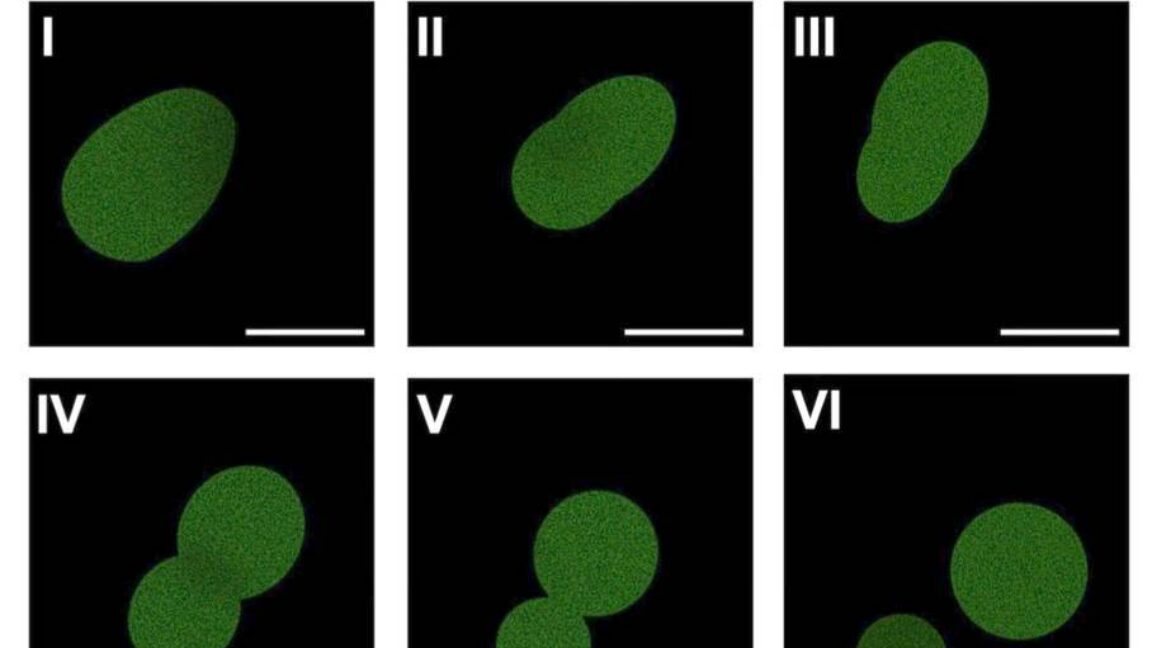
Scientists have created an artificial cell that can undergo a few rounds of cell division. The cell's ability to divide is currently limited due to the need for added materials.
An artificial cell has been developed that can complete a few rounds of cell division. This breakthrough is the result of adding a significant amount of materials to the cell. The cell division process is complex and requires specific conditions to occur. In this case, the added materials provide the necessary support for the cell to divide, but only for a limited number of divisions.
The artificial cell's ability to divide is a significant step forward in the field of synthetic biology. However, more research is needed to understand how to sustain the cell division process without the need for added materials. The current limitations of the artificial cell highlight the challenges of replicating the complex processes that occur in natural cells.
Go Deeper
What is an artificial cell?
An artificial cell is a man-made cell that is created in a laboratory. It is designed to mimic the functions of a natural cell, but is not a living organism.
How does the artificial cell divide?
The artificial cell divides through a process that is supported by added materials. These materials provide the necessary conditions for the cell to divide, but the exact mechanism is not fully understood.
What are the limitations of the artificial cell?
The artificial cell can only undergo a few rounds of cell division before it stops. This is because the added materials that support the cell division process are limited and can only sustain the cell for a short period of time.
What are the potential applications of artificial cells?
Artificial cells have the potential to be used in a variety of applications, including the production of biofuels, the development of new medicines, and the creation of new materials.
How does this breakthrough advance the field of synthetic biology?
The creation of an artificial cell that can divide is a significant step forward in the field of synthetic biology. It demonstrates the potential for creating complex biological systems in the laboratory and could lead to new advances in our understanding of cellular biology.
More technology
 technology
Google Loses Appeal of EU Fine
Google has lost its appeal of a European Union fine. The company will have to pay $4.7 billion.
Jul 2 technology
Plex Introduces 5-Year Membership Pass for $250
Plex has introduced a new membership option, a 5-year pass priced at $250. This move is part of the company's strategy to encourage customers to adopt
Jul 2 technology
NASA Awaits New Rocket Development Timelines
NASA is waiting for the development of new rockets. The space agency has not received a specific timeline for their completion.
Jul 2