
Countries and companies seek to bypass the Strait of Hormuz
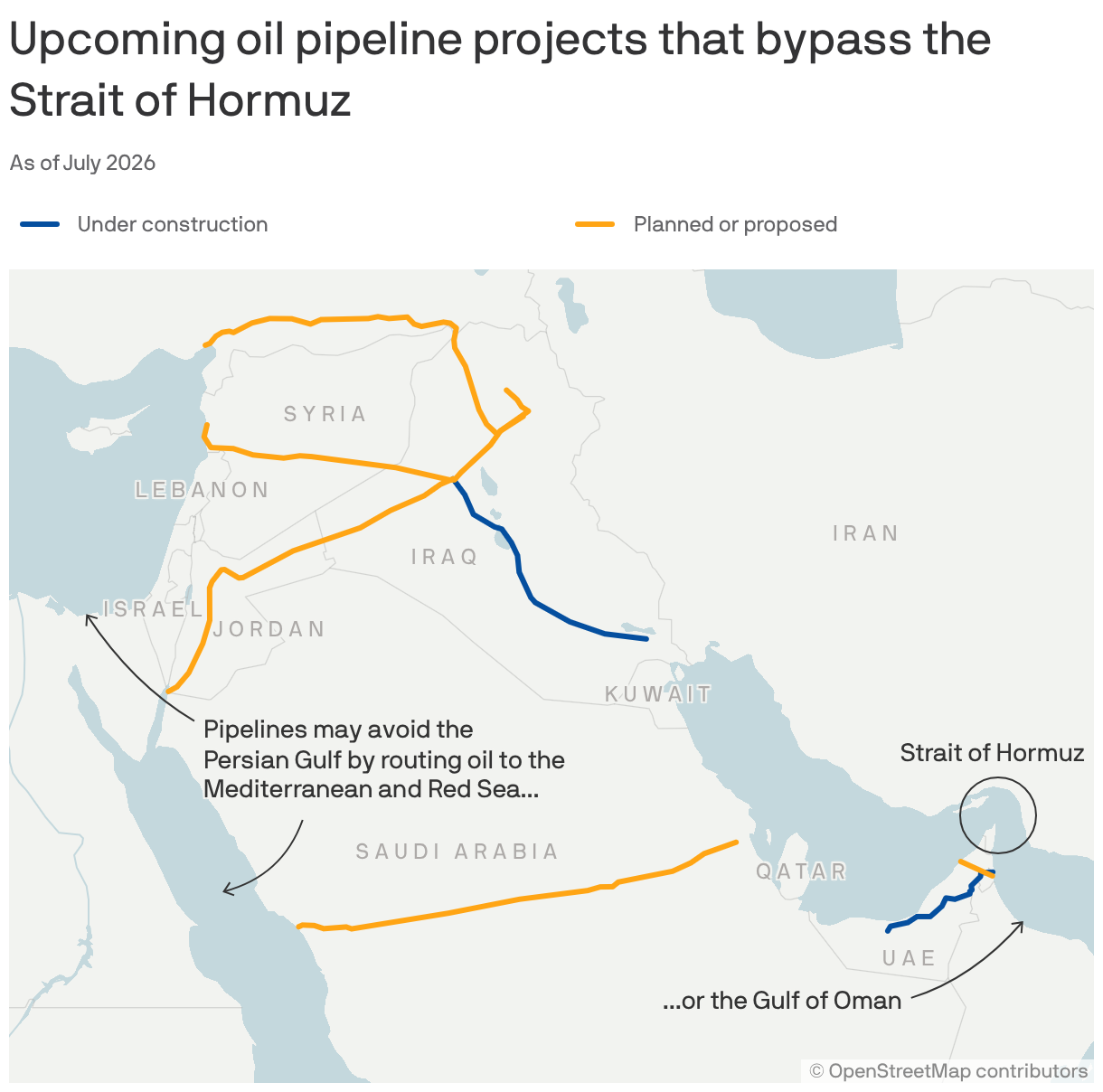
The Strait of Hormuz, a key waterway for global energy trade, has become a focal point due to the U.S.-Iran war. Countries and companies are now working to reduce their dependence on the strait by exploring alternative shipment methods. This effort is driven by the desire to minimize the impact of any future disruptions to the strait.
The U.S.-Iran war has highlighted the importance of the Strait of Hormuz, with the oil market's top players seeking to bypass the waterway. According to Bloomberg Intelligence analysts, the war may ultimately accelerate global efforts to reduce dependence on the strait, regardless of the war's outcome. President Trump recently announced that the U.S. would reinstate its blockade of Iran in the strait and proposed charging other countries 20% of the value of cargo shipped through it.
The threat of a blockade has given producers even more incentive to figure out alternative shipment methods. As a result, oil prices have increased by more than 9%, with the price of a barrel of benchmark Brent crude oil reaching $86.57. Commodity analysts at Goldman Sachs have identified seven pipeline and export-infrastructure projects that are under construction, planned, or considered potentially feasible. These projects could insulate more than 45% of the pre-war level of Persian Gulf producers' exports from any potential future Hormuz shocks by the end of next year.
Two projects are already under construction: the West-East pipeline in the UAE and the Basra-Haditha Pipeline in Iraq. A Dubai-based port operator is also in talks to develop a new port on the coast of the UAE to reduce the country's dependence on the strait. Construction for these pipelines is expected to be relatively quick, with the median time to complete being 2.5 years.
Despite these efforts, the world still needs the strait, with 7 million to 9 million barrels of crude and refined products per day remaining exposed to its risks even after a rerouting buildout. Qatar's liquefied natural gas exports have no realistic alternative, and Kuwait and Iraq remain heavily dependent on the strait.
Go Deeper
What is the Strait of Hormuz and why is it important?
The Strait of Hormuz is a key waterway for global energy trade, with roughly 20% of the world's oil flowing through it. Its importance lies in its role as a major shipping route for oil and natural gas.
How are countries and companies responding to the U.S.-Iran war?
Countries and companies are working to reduce their dependence on the Strait of Hormuz by exploring alternative shipment methods, such as building new pipelines and export infrastructure.
What is the impact of the U.S. blockade on the strait?
The threat of a blockade has given producers even more incentive to figure out alternative shipment methods, leading to an increase in oil prices.
What are some of the pipeline and export-infrastructure projects being developed?
There are seven pipeline and export-infrastructure projects that are under construction, planned, or considered potentially feasible, including the West-East pipeline in the UAE and the Basra-Haditha Pipeline in Iraq.
How long will it take to complete these projects?
Construction for these pipelines is expected to be relatively quick, with the median time to complete being 2.5 years.
More politics
 politics
House to Vote on Short-Term Funding Bill Next Week
House Speaker Mike Johnson plans to hold a vote on a short-term funding bill next week, more than two months before the government runs out of money.
Jul 17 politics
Abdul El-Sayed asks supporters to stop attacking Haley Stevens
Abdul El-Sayed, a Democratic Senate candidate in Michigan, has asked his supporters to stop making personal attacks against his primary rival, Rep. Ha
Jul 17 politics
Senate Race Map Takes Shape After Primary Elections
The competitive Senate race map is becoming clearer after primary elections. Several key races will determine the balance of power in the Senate.
Jul 17