
Countries and companies seek to bypass the Strait of Hormuz
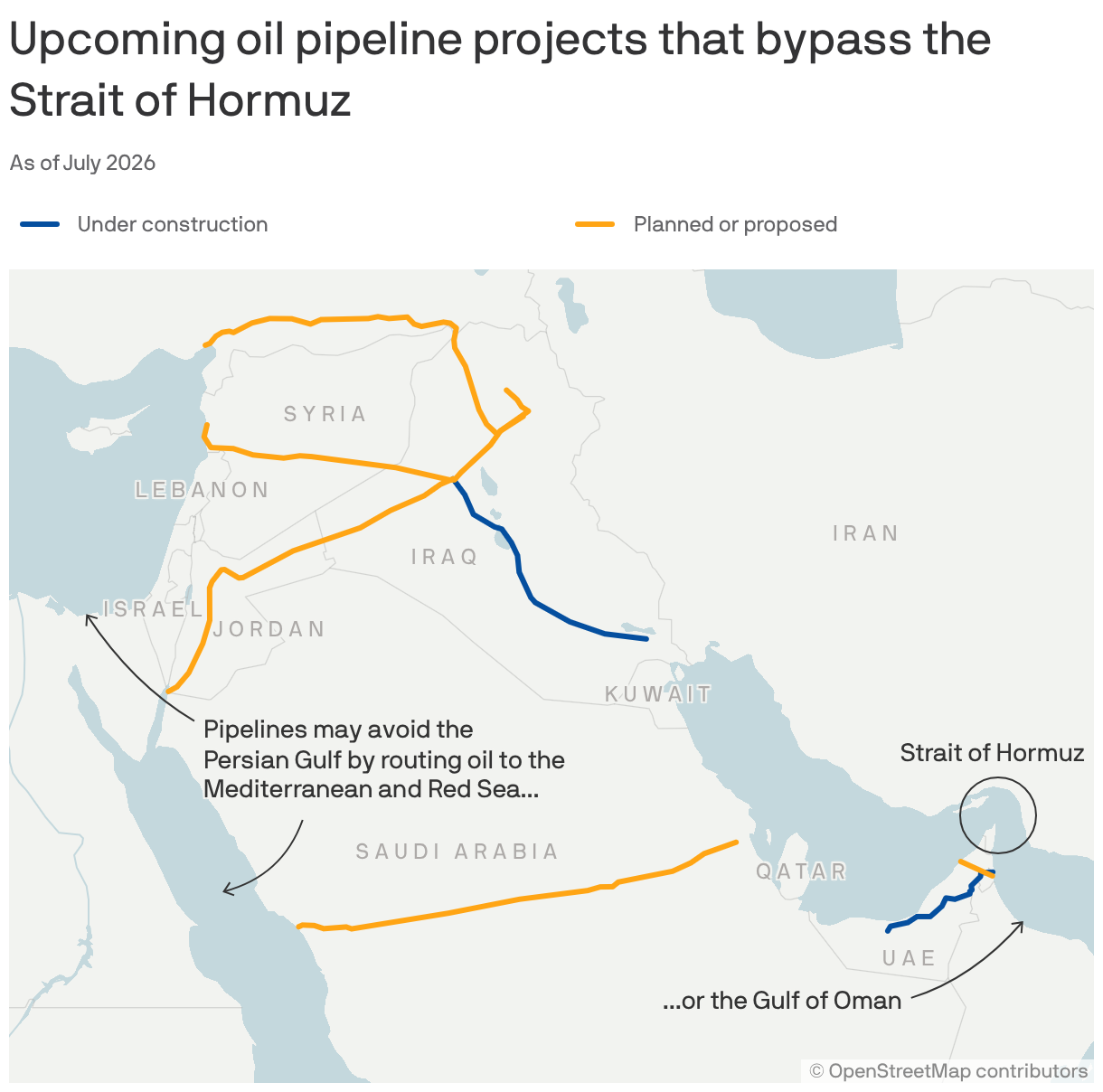
The Strait of Hormuz, a key waterway for global energy trade, has become a focal point due to the U.S.-Iran war, prompting countries and companies to explore alternative shipment methods. President Trump's recent remarks about reinstating a blockade and proposing a toll have added to the urgency.
The oil market's top players are not waiting to see who gains control over the Strait of Hormuz, with countries and companies scrambling to bypass the waterway. The Iran war has highlighted the strait's importance as the center of the global energy trade, and the industry now has a huge incentive to reduce its dependence, regardless of the war's outcome.
Bloomberg Intelligence analysts wrote in a report that the 2026 U.S.-Iran war and Strait of Hormuz disruption may ultimately be remembered for accelerating global efforts to reduce dependence on the world's most important energy chokepoint. The ceasefire agreement between the U.S. and Iran is quickly unraveling, with President Trump saying the U.S. would reinstate its blockade of Iran in the strait and proposing charging other countries 20% of the value of cargo shipped through it.
This threat may not materialize, as the International Maritime Organization says there's no legal basis for a toll, but it gives producers even more incentive to figure out alternative shipment methods. Commodity analysts at Goldman Sachs looked at seven pipeline and export-infrastructure projects under construction, planned, or considered potentially feasible, estimating that by the end of next year, the capacity could insulate more than 45% of the pre-war level of Persian Gulf producers' exports from any potential future Hormuz shocks.
Go Deeper
What is the Strait of Hormuz and why is it important?
The Strait of Hormuz is a key waterway for global energy trade, with roughly 20% of the world's oil flowing through it at the outset of the war. Its importance lies in its role as a major shipping route for oil from the Middle East.
What has prompted countries and companies to seek alternative shipment methods?
The U.S.-Iran war and the resulting disruption to the Strait of Hormuz have prompted countries and companies to explore alternative shipment methods to reduce their dependence on the waterway.
What is the current status of the ceasefire agreement between the U.S. and Iran?
The ceasefire agreement between the U.S. and Iran is quickly unraveling, with President Trump saying the U.S. would reinstate its blockade of Iran in the strait and proposing charging other countries 20% of the value of cargo shipped through it.
What are some of the pipeline and export-infrastructure projects being considered?
Commodity analysts at Goldman Sachs have identified seven pipeline and export-infrastructure projects under construction, planned, or considered potentially feasible, including the West-East pipeline in the UAE and the Basra-Haditha Pipeline in Iraq.
How long will it take to complete these pipeline projects?
Construction for these pipelines is expected to be relatively quick, with the median time to complete being 2.5 years, and projects prompted by supply disruptions tend to move faster.
More politics
 politics
Arizona Holds Primary Elections
Arizona voters went to the polls to choose candidates for the fall elections. The primaries will set the stage for several contested races, including
Jul 21 politics
House Speaker Mike Johnson Supports Ban on Lawmakers Dating Hill Staff
House Speaker Mike Johnson expressed support for banning lawmakers from having romantic or sexual relationships with Capitol Hill staff. A bipartisan
Jul 21 politics
New Jersey Governor Announces Removal of Noncitizens from Voter Rolls
A software error in New Jersey's motor vehicle system led to the registration of approximately 6,600 noncitizens to vote. These individuals have been
Jul 21