
EU Proposes Adjustments to Emissions Trading System
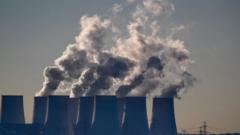
The European Union has proposed changes to its emissions trading system, aiming to give companies more time to reduce their carbon output. This adjustment is intended to relax the current pace of emissions cuts for businesses.
The European Union has put forth a proposal to adjust its emissions trading system. This system, designed to reduce carbon emissions, would be relaxed to give companies more time to decrease their carbon output. The proposal comes as part of the EU's ongoing efforts to balance environmental goals with economic realities. By slowing down the cuts to carbon emissions, the EU hopes to provide businesses with a more feasible timeline for reducing their environmental impact. This move could have significant implications for businesses operating within the EU, as it may affect their operational costs and investment strategies.
Go Deeper
What is the EU's emissions trading system?
The EU's emissions trading system is a market-based mechanism that aims to reduce greenhouse gas emissions from certain industries. It sets a cap on the total amount of emissions allowed and lets companies buy and sell emission allowances.
Why is the EU proposing to relax its emissions trading system?
The EU is proposing this adjustment to give companies more time to reduce their carbon output, likely in response to concerns about the economic impact of rapid emissions cuts on businesses.
How will this proposal affect businesses in the EU?
This proposal could provide businesses with more time to adapt to emissions reductions, potentially reducing the financial burden of rapid cuts. However, it may also be seen as a step back in the EU's efforts to combat climate change.
What are the potential environmental implications of this proposal?
By slowing down emissions cuts, the proposal might lead to higher carbon emissions in the short term, potentially hindering global efforts to mitigate climate change. However, the EU may argue that this adjustment is necessary to ensure a more sustainable and feasible transition to a low-carbon economy.
When might this proposal be implemented?
The proposal's implementation timeline is not yet clear, as it will need to go through the EU's legislative process. This involves approval from both the European Parliament and the Council of the European Union.
More world
 world
worldThree Islands Near Strait of Hormuz Draw Attention
The U.S. military campaign against Iran has focused on three small islands near the Strait of Hormuz. These islands are strategically located at the c
Jul 17 world
worldFIFA and White House monitor air quality from Canada wildfires ahead of World Cup final
Officials from FIFA and the White House are tracking smoke from Canadian wildfires that has affected air quality in the New York area. The World Cup f
Jul 17 world
worldGerman Politician Jens Spahn Faces Resignation Calls
Jens Spahn, a German politician, is facing calls to resign due to his involvement with a surrogacy child. Surrogacy is banned in Germany, a policy sup
Jul 17