
Ivy League Professor Holds In-Person Final Due to AI Cheating Concerns
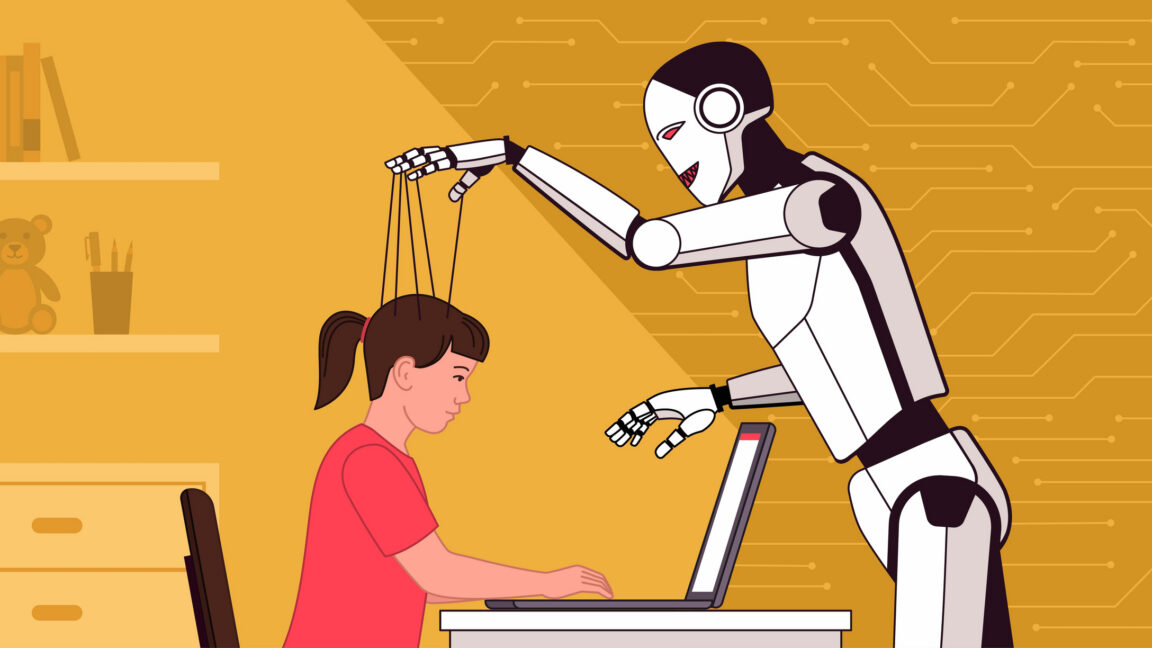
An Ivy League professor ordered an in-person final exam due to concerns about AI cheating. The scores on the in-person exam were 50% lower than previous exams.
An Ivy League professor, concerned about the potential for AI cheating, decided to hold an in-person final exam. The professor's decision came after suspicions that some students may have been using artificial intelligence to complete their work. The results of the in-person exam showed a significant drop in scores, with a 50% decrease compared to previous exams.
The professor has expressed concerns about the impact of AI cheating on society, stating that it could lead to a 'failed society.' The incident highlights the growing issue of AI cheating in academic settings and the need for educators to find ways to prevent it. The professor's actions demonstrate one approach to addressing the problem, by taking steps to ensure the integrity of the exam process.
The use of AI in academic cheating is a growing concern, as it can be difficult to detect and can give students an unfair advantage. Educators are looking for ways to prevent AI cheating, including the use of in-person exams and other methods to verify the authenticity of student work.
Go Deeper
Why did the professor decide to hold an in-person final exam?
The professor decided to hold an in-person final exam due to concerns about AI cheating. The professor suspected that some students may have been using artificial intelligence to complete their work, and wanted to ensure the integrity of the exam process.
How much did the scores decrease on the in-person exam?
The scores on the in-person exam were 50% lower than previous exams. This significant drop in scores suggests that some students may have been relying on AI to complete their work, and were unable to perform as well without it.
What are the concerns about AI cheating in academic settings?
The concerns about AI cheating in academic settings are that it can give students an unfair advantage, and can undermine the integrity of the educational process. If students are able to use AI to complete their work, it can be difficult to assess their actual knowledge and understanding of the material.
How can educators prevent AI cheating?
Educators can prevent AI cheating by taking steps to verify the authenticity of student work, such as holding in-person exams or using other methods to ensure that students are doing their own work. Additionally, educators can use tools and techniques to detect AI-generated content, and can work to educate students about the importance of academic integrity.
What are the potential consequences of AI cheating?
The potential consequences of AI cheating are significant, and can include undermining the value of a degree, and creating a 'failed society' where individuals are not able to think critically and solve problems on their own. If AI cheating becomes widespread, it can have serious consequences for individuals, institutions, and society as a whole.
More technology
 technology
Sony Releases New RX10 V Camera with Upgraded Sensor
Sony has announced the RX10 V, a new superzoom camera with a stacked sensor. The camera features a 20.1-megapixel 1-inch-type sensor and a 24-600mm eq
Jul 9 technology
Talisman Design Introduces PocketMage, a Clamshell PDA with E-Paper Screen
Talisman Design is crowdfunding the PocketMage, a personal digital assistant that features a tactile keyboard and e-paper screen. The device is design
Jul 9 technology
Sonos Ace Headphones Discounted to $279
The Sonos Ace wireless headphones are on sale for $279, down from the usual price of $399. The discount is available at multiple retailers, including
Jul 9