
Jupiter-size Planet Survives Star's Death
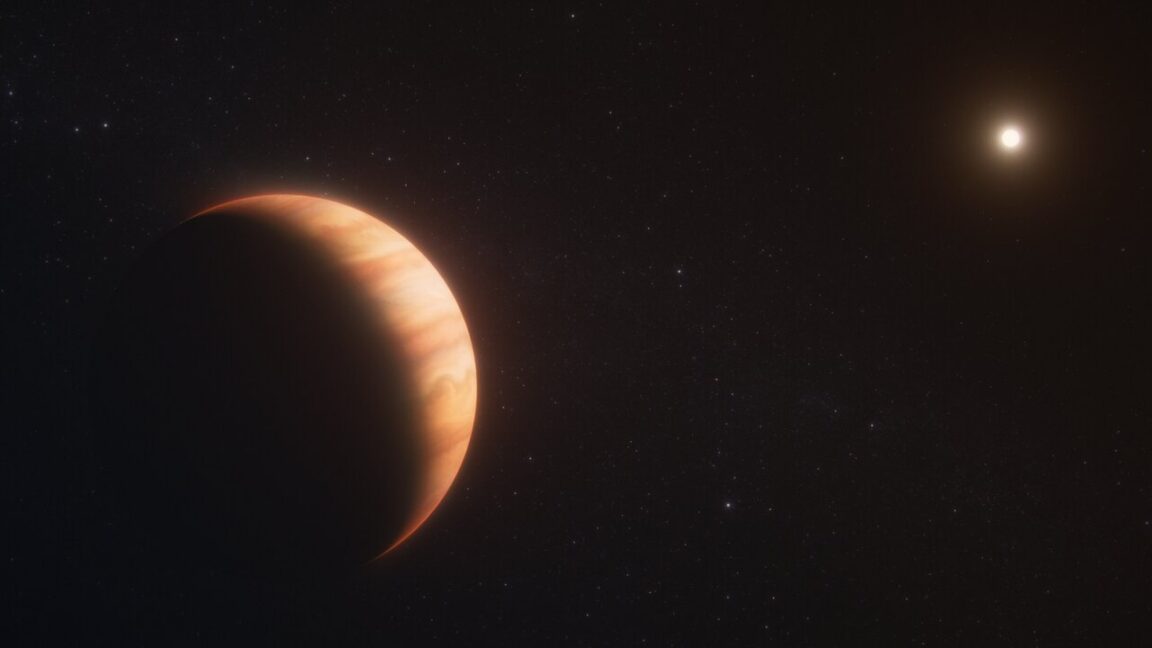
A Jupiter-size planet has been found to have survived its star's death. The planet's survival is unusual because it is unclear how it avoided its star's bloated red giant stage.
A Jupiter-size planet has been discovered to have survived the death of its star. This is a significant finding because the planet's survival is unexpected. Normally, a star's expansion into a red giant would engulf and destroy any nearby planets. However, in this case, the Jupiter-size planet was able to avoid this fate. The planet's ability to survive its star's death is currently not well understood. Scientists are still trying to determine how the planet managed to avoid its star's bloated red giant stage.
The discovery of this planet provides new insights into the life cycles of stars and their planetary systems. It also raises questions about the potential for other planets to survive the death of their stars. Further study of this planet and its star is needed to understand the circumstances that allowed the planet to survive.
Go Deeper
What is a red giant stage?
A red giant stage is a phase in the life of a star where it expands and becomes much larger than its original size. This stage occurs when a star has exhausted its fuel and begins to cool and expand.
How do stars typically affect their planets during the red giant stage?
During the red giant stage, a star can engulf and destroy any nearby planets. This is because the star's expansion causes it to grow to many times its original size, which can reach the orbits of nearby planets.
What is unique about the Jupiter-size planet that was discovered?
The Jupiter-size planet that was discovered is unique because it survived the death of its star. This is unusual because the planet should have been engulfed and destroyed by the star's expansion into a red giant.
Why is the discovery of this planet significant?
The discovery of this planet is significant because it provides new insights into the life cycles of stars and their planetary systems. It also raises questions about the potential for other planets to survive the death of their stars.
What further research is needed to understand this planet and its star?
Further study of this planet and its star is needed to understand the circumstances that allowed the planet to survive. This could involve analyzing the planet's orbit and composition, as well as the star's life cycle and evolution.
More technology
 technology
Volkswagen Group Presents Restructuring Plan to Board
Volkswagen Group has presented a plan to its board to reduce the number of models it offers. The plan aims to streamline the company's operations but
Jul 11 technology
NASA Releases Private Space Station Requirements
NASA has outlined its requirements for private space stations. The move is expected to guide industry efforts to develop commercial space stations.
Jul 11 technology
Drone Surveillance Leads to $100K Fine for Illegal Fireworks
Authorities have increased their use of drones to monitor and prevent illegal fireworks. This effort has resulted in a $100,000 fine for such activiti
Jul 11