
Scientists Discover Brain Wiring Linked to Preserved Cognition
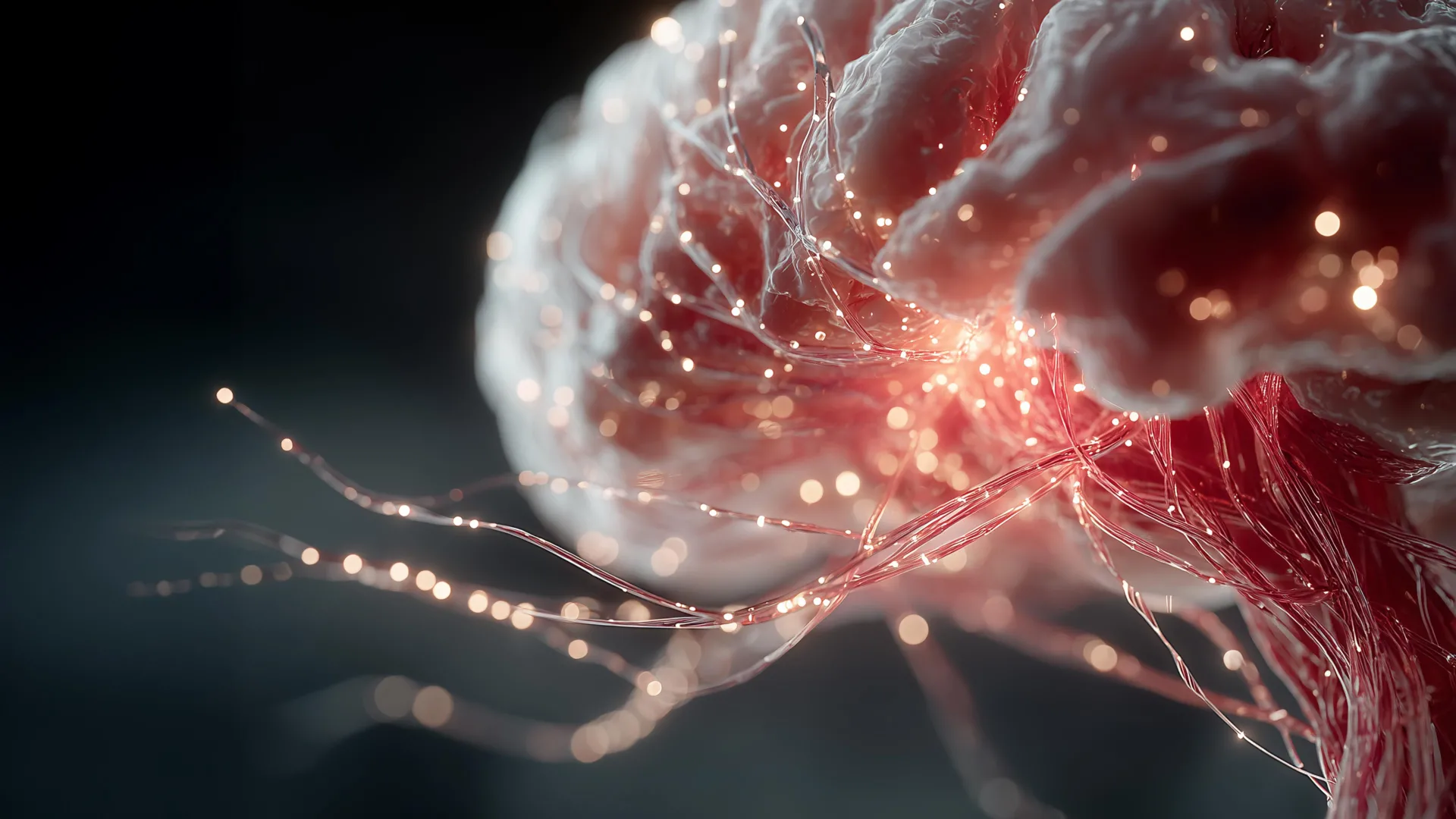
Researchers have found that the brain's short-range wiring may help protect cognitive function as people age. Healthier connections beneath the brain's surface were associated with better language skills and reduced impact of gray matter loss.
Scientists have made a significant discovery about the brain's ability to maintain cognitive function despite the natural shrinkage of gray matter that occurs with age. The brain's short-range wiring, which refers to the connections between nearby neurons, may play a crucial role in preserving cognition. Researchers found that healthier connections just beneath the brain's surface were linked to better language skills. This suggests that even as gray matter shrinks, the brain's wiring can help compensate for this loss and support continued cognitive function. The study's findings have important implications for our understanding of how the brain ages and how we can work to preserve cognitive health. By examining the brain's wiring and its relationship to gray matter loss, scientists may be able to develop new strategies for supporting healthy brain function as people age. The discovery highlights the complex and dynamic nature of the brain and its ability to adapt and compensate for age-related changes.
Go Deeper
What is gray matter and how does it change with age?
Gray matter is the tissue in the brain that contains neurons and their supporting cells. As people age, gray matter naturally shrinks, which can affect cognitive function. However, the rate and extent of this shrinkage can vary from person to person.
How does the brain's short-range wiring support cognition?
The brain's short-range wiring refers to the connections between nearby neurons. These connections allow neurons to communicate with each other and support a range of cognitive functions, including language skills and memory. Healthier connections are associated with better cognitive function.
What are the implications of this discovery for our understanding of brain aging?
The discovery suggests that the brain's wiring plays a critical role in preserving cognitive function as people age. This challenges the traditional view that gray matter loss is the primary driver of age-related cognitive decline. Instead, it highlights the complex and dynamic nature of the brain and its ability to adapt and compensate for age-related changes.
Can this discovery lead to new strategies for supporting healthy brain function?
Yes, the discovery highlights the importance of preserving healthy brain wiring as people age. Scientists may be able to develop new strategies for supporting healthy brain function, such as therapies that target the brain's wiring or lifestyle interventions that promote healthy brain aging.
What further research is needed to fully understand the relationship between brain wiring and cognition?
Further research is needed to fully understand the relationship between brain wiring and cognition. This could include studies that examine the brain's wiring in different populations, such as older adults or individuals with neurodegenerative diseases, and studies that investigate the effects of different lifestyle interventions on brain wiring and cognition.
More health
 health50+
Researchers Identify Potential Driver of Aging in Immune Cells
A study found that immune cells losing their ability to clear away damaged cells may contribute to aging. Blocking a specific receptor in mice helped
Sep 27 health50+
Study Finds Dementia Risk Factors in People Over 90
A recent study examined dementia risk in people over 90 and found that sex, race, and genetics play a significant role. The study also identified indi
Sep 27 health50+
Ozempic Shows Promise in Slowing Aging in Mice
Scientists have found that semaglutide, the active ingredient in Ozempic, may help slow aging in older healthy mice. The drug improved memory, muscle
Sep 27