
US Carries Out Third Night of Military Strikes Against Iran
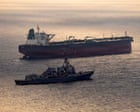
The US conducted a third night of military strikes against Iran, causing oil and gas prices to jump. Prices later stabilized after President Donald Trump abandoned a proposed 20% levy on cargo passing through the Strait of Hormuz.
The US carried out a third night of military strikes against Iran on Tuesday, causing oil and gas prices to rise. This increase led to higher expectations of interest rate rises in Europe. The US military action was the third night of strikes against Iran. Oil and gas prices jumped in response to the escalating tensions between the US and Iran. However, prices later eased back after President Donald Trump announced that he would abandon his proposal for a 20% fee on cargo passing through the Strait of Hormuz. This decision helped to stabilize energy prices. The situation in the region remains volatile, with ongoing military action and economic repercussions. The US-Iran clashes have raised concerns about global energy supplies and economic stability. The abandonment of the proposed levy has helped to calm markets, but the situation remains uncertain. The US and Iran have been engaged in a series of military exchanges, leading to increased tensions in the region. The economic impact of these clashes is being closely watched by markets and governments around the world.
Go Deeper
What led to the increase in oil and gas prices?
The US carried out a third night of military strikes against Iran, leading to an increase in oil and gas prices. The proposed 20% levy on cargo passing through the Strait of Hormuz also contributed to the price jump.
Why did energy prices stabilize later?
Energy prices stabilized after President Donald Trump announced that he would abandon his proposal for a 20% fee on cargo passing through the Strait of Hormuz.
What is the current situation in the region?
The situation in the region remains volatile, with ongoing military action and economic repercussions. The US and Iran have been engaged in a series of military exchanges, leading to increased tensions in the region.
How have markets responded to the US-Iran clashes?
Markets have responded to the US-Iran clashes with increased expectations of interest rate rises in Europe. The economic impact of these clashes is being closely watched by markets and governments around the world.
What is the significance of the Strait of Hormuz?
The Strait of Hormuz is a critical waterway for global energy supplies, with a significant portion of the world's oil passing through it. Any disruption to traffic through the strait could have significant economic repercussions.
More us
 us
usBryson DeChambeau Involved in Heated Penalty Strokes Incident at British Open
Bryson DeChambeau was involved in a heated incident at the British Open. The incident occurred over penalty strokes.
Jul 17 us
usTaylor Farms Recalls Iceberg Lettuce Linked to Cyclosporiasis Outbreak
Taylor Farms is voluntarily recalling its iceberg lettuce due to a link to a nationwide cyclosporiasis outbreak. The recall was announced on Friday.
Jul 17 us
usNBC and USA Network Limit Coverage of Sam Burns' 62 at The Open
Sam Burns shot a 62 at The Open, but his round received limited coverage on NBC and USA Network. This decision left some viewers surprised when he app
Jul 17