
U.S. Deploys B-1 Bomber in Iran Strikes
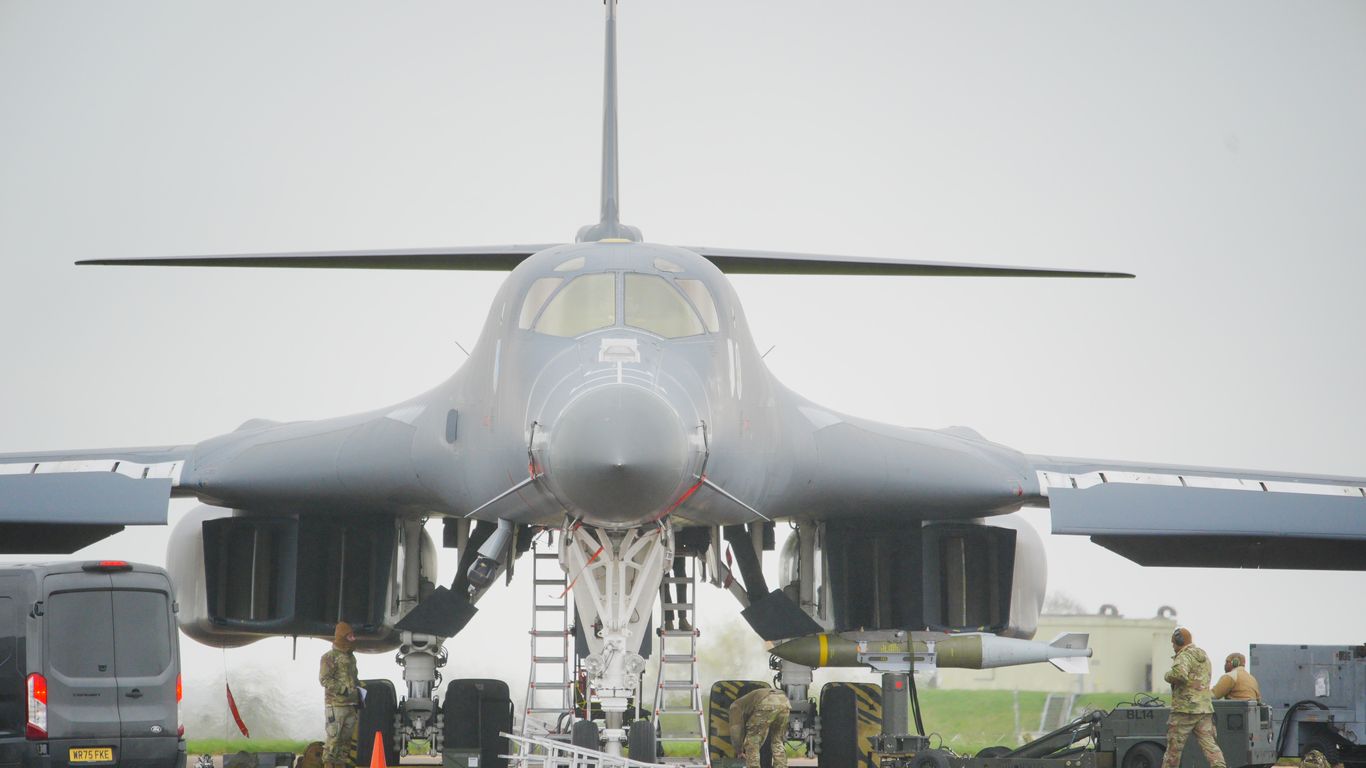
The U.S. military used a B-1 bomber to strike Islamic Revolutionary Guard Corps targets in Iran. This marks the first time a B-1 mission has been conducted since fighting with Iran resumed 12 days ago.
The U.S. military used a B-1 long-range bomber on Tuesday to strike Islamic Revolutionary Guard Corps targets in Iran, according to U.S. officials. The B-1 bomber, which can carry two dozen 2,000-lb. bombs or dozens of cruise missiles, launched its mission from an airbase in the UK.
The use of the B-1 bomber signals a significant escalation and expansion of the U.S. military campaign. The B-1 can fly faster than the speed of sound at low altitudes while carrying the largest bomb load of any type of bomber. U.S. Central Command (CENTCOM) targeted Iranian military operations centers, maritime capabilities, aircraft hangars, drone storage facilities, and military logistics infrastructure to further degrade Iran's ability to threaten commercial shipping in the Strait of Hormuz.
Despite the expansion of U.S. strikes, the Iranian regime hasn't seemed to change its position on the Strait of Hormuz. Iran is still conducting attacks against U.S. bases in the region. President Trump threatened to bomb bridges and power plants, including in Tehran, if Iran attacks more ships in the Strait of Hormuz. Iran responded by threatening infrastructure in Gulf countries allied with the U.S.
Go Deeper
What is the significance of the B-1 bomber?
The B-1 bomber is a long-range bomber that can carry a large bomb load and fly faster than the speed of sound at low altitudes. Its use signals a significant escalation and expansion of the U.S. military campaign.
What were the targets of the U.S. strikes in Iran?
The U.S. Central Command (CENTCOM) targeted Iranian military operations centers, maritime capabilities, aircraft hangars, drone storage facilities, and military logistics infrastructure to further degrade Iran's ability to threaten commercial shipping in the Strait of Hormuz.
How has Iran responded to the U.S. strikes?
Iran has continued to conduct attacks against U.S. bases in the region and has threatened infrastructure in Gulf countries allied with the U.S. if the U.S. bombs bridges and power plants in Tehran.
What is the current state of diplomatic efforts to resolve the conflict?
Qatari mediators are still talking to U.S., Iranian, and Omani officials to try to reach a new deal to reopen the Strait of Hormuz and stop the fighting. However, Iranian leadership hasn't accepted the latest proposal put forward by the mediators.
What are the potential consequences of the conflict escalating?
The conflict escalating could lead to further attacks on commercial shipping in the Strait of Hormuz, as well as attacks on infrastructure in Gulf countries allied with the U.S. It could also lead to a wider conflict in the region.
More politics
 politics
Trump Comments on Blanche Nomination Process
President Trump addressed concerns about the nomination process for acting Attorney General Todd Blanche. He stated that he has not heard of any issue
Jul 29 politics
Trump says he is close to deciding on larger strikes against Iran
President Trump told Axios he is considering a massive attack on Iran that would exceed past operations. He has not set a deadline or issued new milit
Jul 29 politics
AI Boom Complicates Central Banking
The AI boom is affecting the economy in complex ways, making it harder for central bankers to set policy. A new paper from the Bank for International
Jul 29