
Central Banks Plan More Gold Purchases Amid Inflation and Uncertainty
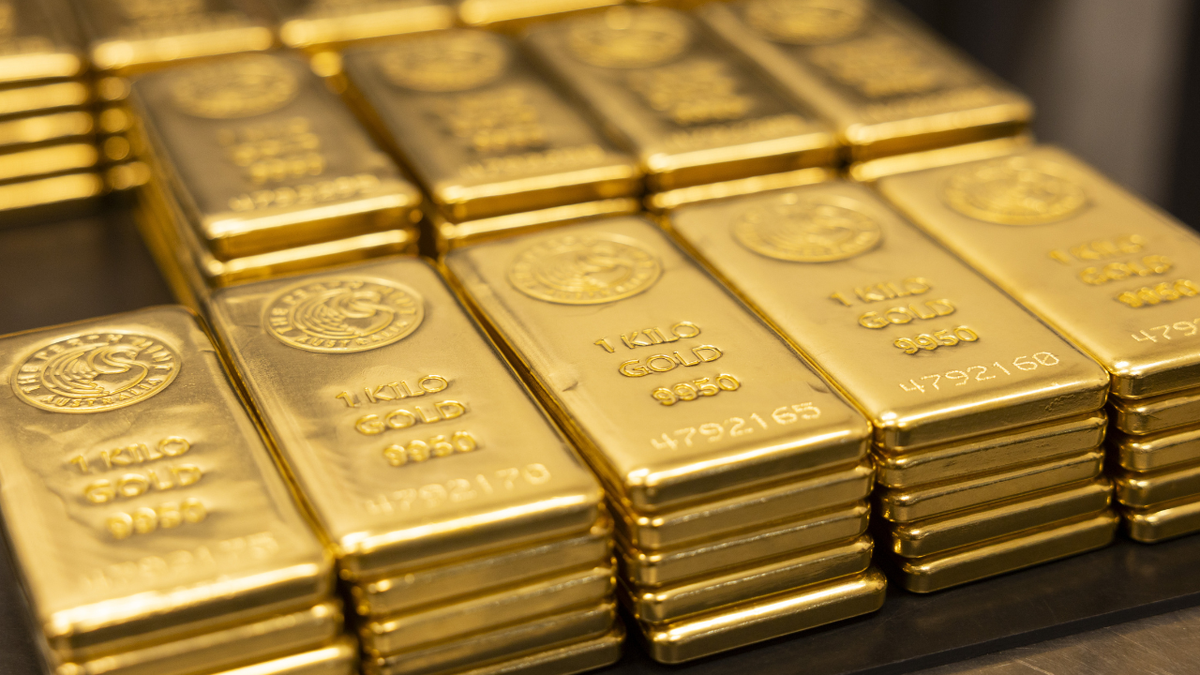
A World Gold Council survey found 89 percent of central banks expect global gold reserves to grow next year, and a record 45 percent plan to add to their own holdings. Officials cite crisis performance, inflation hedging, and diversification away from a single currency.
Central banks around the world are adding gold to their reserves as wars, trade tension, and inflation keep markets on edge.
A new World Gold Council survey found that 89 percent of central banks expect global gold reserves to rise over the next year. A record 45 percent said they plan to increase their own holdings. Central banks manage a country's money supply and official financial reserves.
For decades, many of those institutions parked large sums in U.S. Treasuries. Survey respondents now say they want another layer of protection. About 90 percent pointed to gold's performance in crises. Another 84 percent called it a long-term store of value and inflation hedge. About 83 percent said gold helps diversify reserves.
Buyers this year have included Poland, Uzbekistan, Kazakhstan, the Czech Republic, Chile, Jordan, and Ghana, according to World Gold Council market specialist Joseph Cavatoni, who spoke with Fox News Digital. China has drawn attention, but it is not alone. The United States still holds more gold than any other country. Cavatoni said Washington has less natural need to keep piling up gold reserves the way some developing economies do.
Nearly three-quarters of surveyed central banks, about 74 percent, expect the U.S. dollar's share of global reserves to be lower five years from now, while they expect gold's share to rise.
Cavatoni noted that private investors have also been reluctant to sell even with prices near record highs. That suggests many holders treat gold as longer-term insurance rather than a quick trade.
The trend does not mean every household should rush to a coin shop. It does show how large official institutions are preparing for a stretch of inflation risk and geopolitical uncertainty. For retirees and near-retirees, the practical lesson is diversification and caution, not chasing a single hard asset after a big price run.
Go Deeper
Why are central banks buying gold now?
Surveyed banks cite crisis performance, inflation protection, and diversification. Many want assets that are not tied to one country's currency or debt.
Does this mean the dollar is finished?
No. The survey reflects expectations that the dollar's share of reserves may fall over five years, not that gold replaces the dollar overnight.
Which countries are buying?
Besides China, recent buyers named include Poland, Uzbekistan, Kazakhstan, the Czech Republic, Chile, Jordan, and Ghana. The U.S. still owns the largest stockpile.
Should retirees buy gold because banks are?
Central bank strategy is not personal advice. Many advisers still put core savings in diversified funds, cash reserves, and retirement accounts before adding specialty assets.
What share of banks plan to buy more?
A record 45 percent of surveyed central banks said they plan to add to their own gold holdings over the next year.
More business
US Goods and Services Trade Deficit Falls to 73.3 Billion in June
The Census Bureau and Bureau of Economic Analysis said the U.S. goods and services deficit fell to $73.3 billion in June from a revised $77.6 billion
Aug 10business50+Consumer Prices Fall 0.4 Percent in June as Annual Inflation Eases to 3.5 Percent
The Bureau of Labor Statistics said the Consumer Price Index fell 0.4 percent in June after seasonal adjustment, bringing the 12-month inflation rate
Aug 10 business
Monthly Student Loan Payments Increase for Some Borrowers
The end of the SAVE plan has resulted in higher monthly payments for some student loan borrowers. Borrowers are advised to review their budgets and re
Aug 10